
What is Squid Ink?
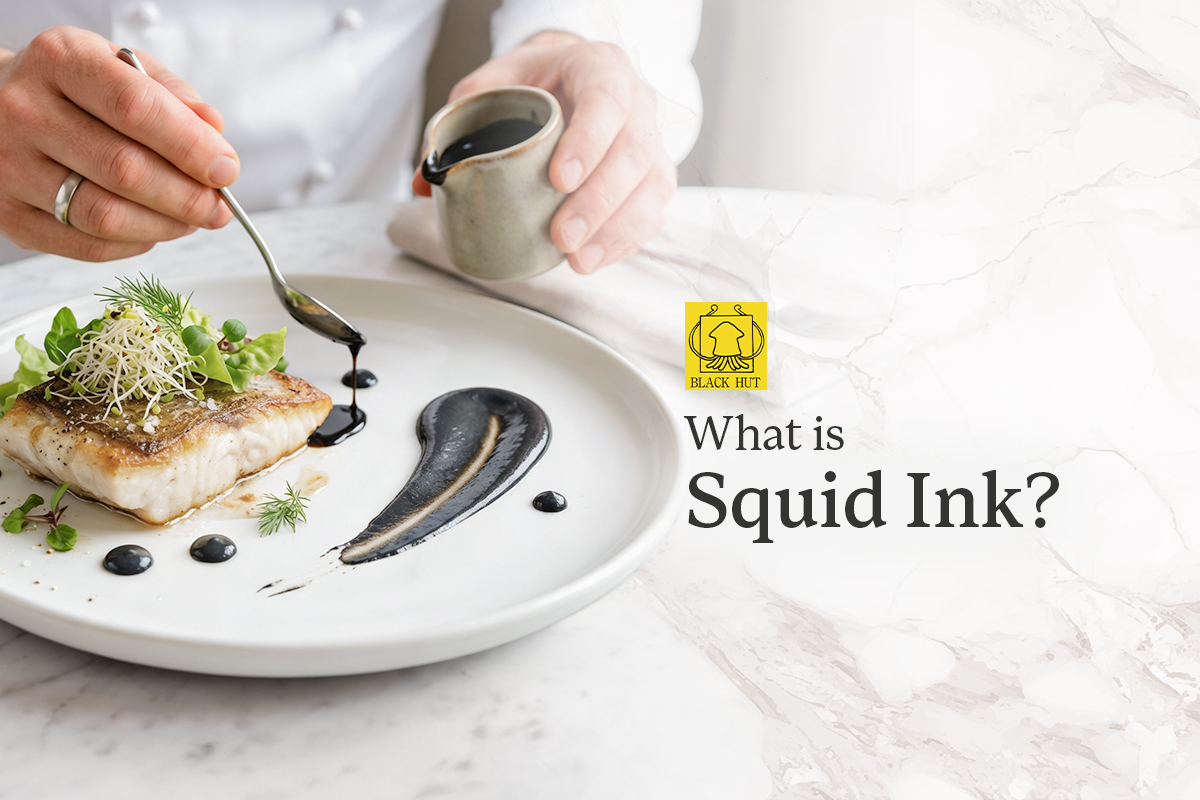
Squid ink is a natural dark pigment stored in an ink sac found in squid and other cephalopods like cuttlefish and octopus.
When threatened, squid release this ink to create a dark cloud, allowing them to escape predators.
Squid ink might look unusual — but is it safe to eat?
Many people wonder whether squid ink is poisonous, toxic, or even edible. In reality, squid ink has been used in cooking for centuries across Mediterranean and Japanese cuisines.
Before we get into how it’s used, let’s first understand what is squid ink made of and why it’s completely safe for human consumption.
What Is Squid Ink Made Of?
The deep black color of squid ink comes primarily from melanin, the same pigment that determines the color of your skin, hair, and eyes.
As natural pigments go, squid ink is one of the most powerful ones on earth — and it’s entirely chemical-free, in the sense that it comes from a living organism rather than a laboratory.
But squid ink isn’t just melanin and water.
A 2017 research study found that squid ink powder is surprisingly high in protein — about 62% of its dry weight, and also contains a small amount of minerals and very little fat.
Squid Ink Liquid or Powder — Does the Form Matter?
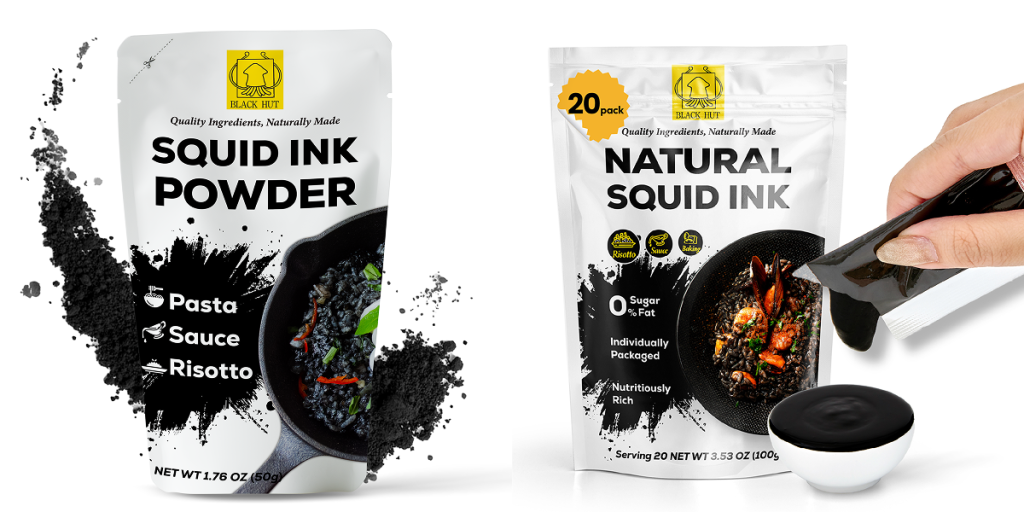
Short answer: yes, quite a lot, depending on what you’re trying to do with it.
Liquid squid ink is what most home cooks and restaurant chefs reach for.
It comes in small jars or sachets, it’s easy to measure, and it blends naturally into wet preparations — pasta doughs, sauces, risottos, marinades.
Squid ink powder is where things get interesting from a food production standpoint.
The powder is made by removing almost all the moisture from squid ink — typically through hot air drying or freeze-drying — which transforms it into a fine, stable, intensely black powder.
This dry format allows manufacturers to do things that liquid squid ink simply can’t.
It can be easily weighed and measured for precise formulations, blended directly into dry premixes, and handled with far less product loss during processing. Because the moisture has been removed, it also stores far longer and is easier to transport and manage in large-scale production.
For food manufacturers, the combination of longer shelf life, accurate dosing, lower waste, and flexibility in dry formulations makes squid ink powder the more practical choice at scale.
How Is Squid Ink Harvested?
From the Ocean to the Ink Sac
Squid ink doesn’t get farmed or synthesized. It starts exactly where you’d expect: with squid, caught at sea through commercial fishing operations.
Once harvested, the ink sacs are carefully extracted during seafood processing — a step that requires both precision and speed, since the ink degrades quickly at room temperature.
To preserve quality from the moment of extraction, the ink sacs are frozen at low temperatures and transported through a cold chain to the production facility.
This is also worth noting from a sustainability standpoint: squid ink is largely a by-product of the seafood industry, making use of material that would otherwise go to waste.
From Raw Ingredient to Food-Grade Product
Once the raw ink arrives at the facility, the production process splits depending on the final format — liquid squid ink or squid ink powder. Both begin the same way, but diverge from there.
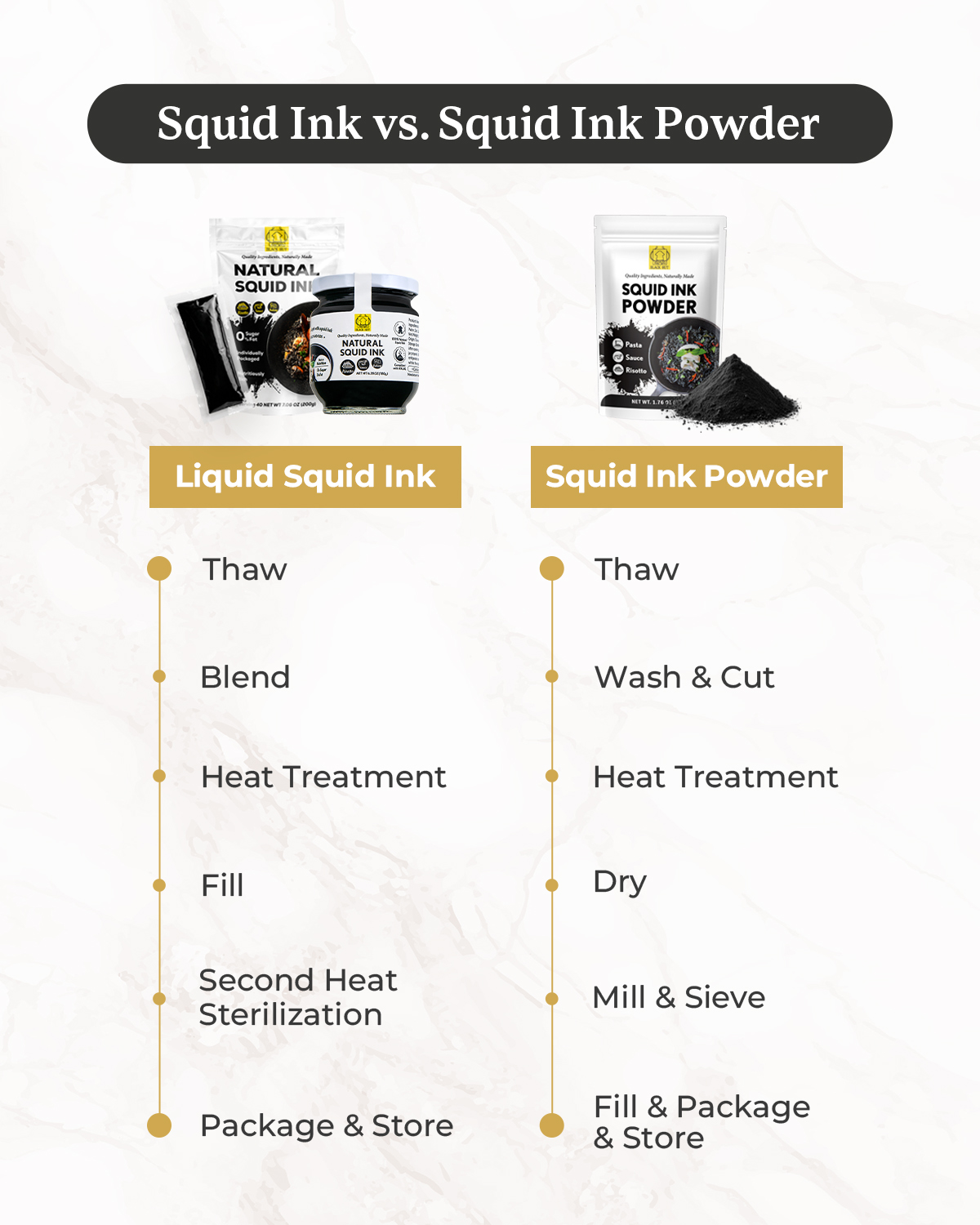
For liquid squid ink, the process follows a clear sequence:
Thaw → Blend → Heat Treatment → Fill
→ Second Heat Sterilization → Package & Store
For squid ink powder, the steps are similar at first, but then take a different path:
Thaw → Wash & Cut → Heat Treatment → Dry
→ Mill & Sieve → Fill & Package → Store
The point where the two processes diverge — drying, milling, and sieving — is also where the technical difficulty spikes.
Getting a stable, fine-grade powder that retains the ink’s natural color intensity and flavor profile without introducing off-notes requires tight control at every step.
This is why BlackHut’s squid ink powder process was developed in collaboration with the University of Maryland, applying food science research to solve exactly these kinds of formulation challenges.
What Does Squid Ink Taste Like?
Squid ink tastes like the ocean — a mild brininess, a whisper of saltiness, and a quiet umami depth that lingers without announcing itself too loudly.
What Is Squid Ink Used For?
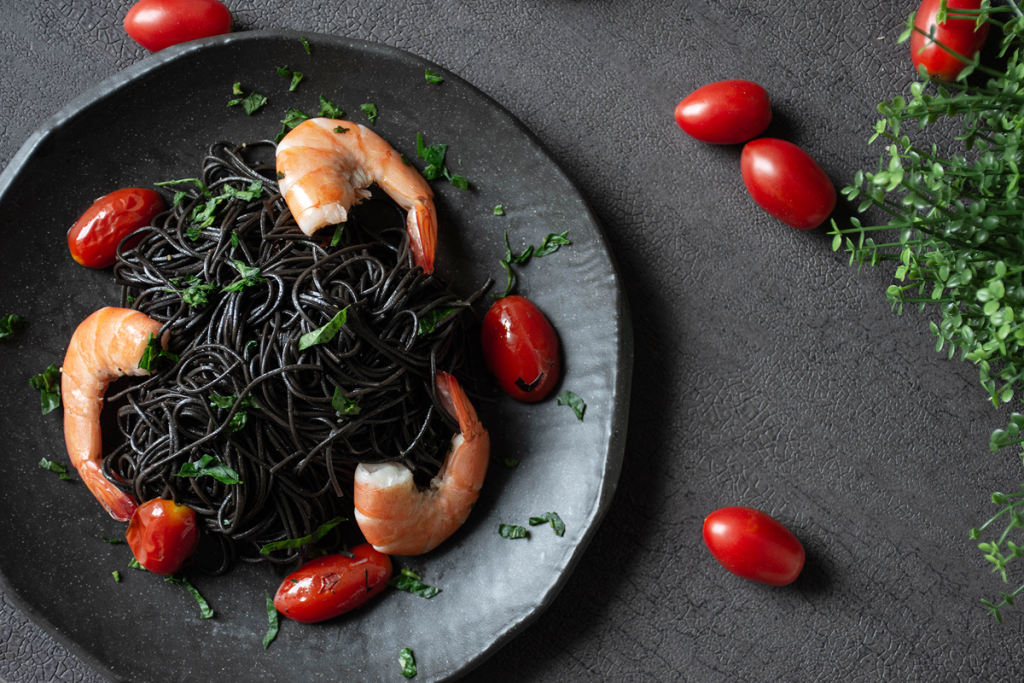
In the kitchen, squid ink shows up in pastas, risottos, seafood sauces, bread, and noodles.
The technique is usually straightforward — add it to a wet or dry mixture, let the melanin do its work, and the result is an even, deep black color that holds up through cooking.
The flavor integrates naturally into savory preparations, especially anything with a seafood or umami base.
In modern food production, squid ink has moved well beyond the trattoria.
It’s now used as a natural black coloring agent in gourmet snacks, specialty crackers, artisan bread, and high-end packaged foods — anywhere a brand wants to create visual impact without reaching for synthetic dyes.
And then there are the cases that tend to catch people off guard.
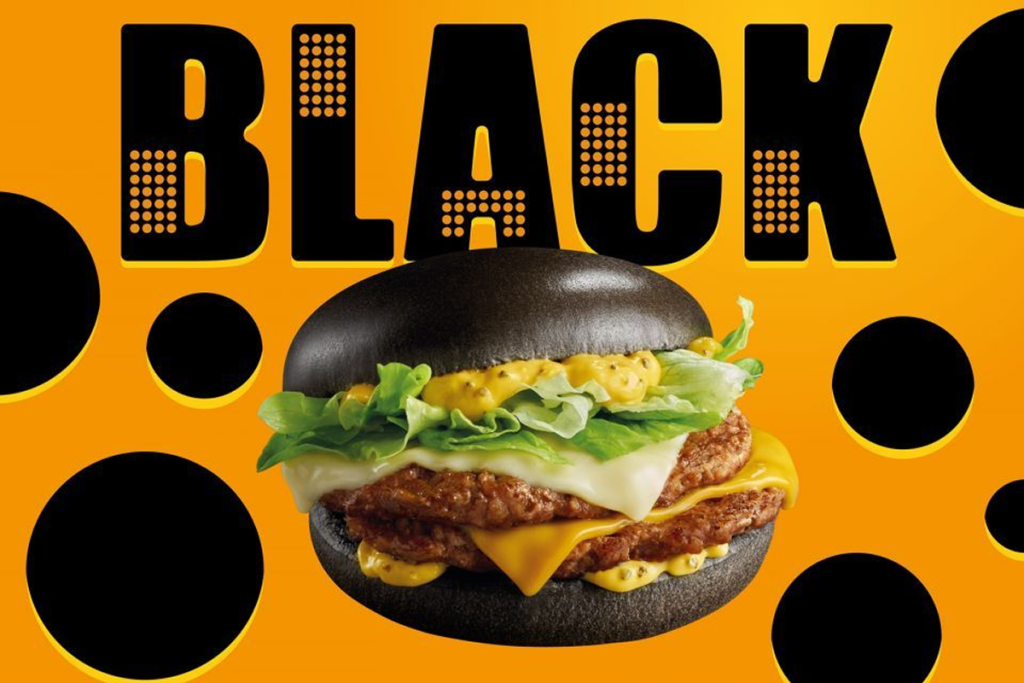
McDonald’s x Apujan — Black Burger Bun
McDonald’s Taiwan collaboration with fashion label Apujan featured a jet-black burger bun colored with squid ink — proof that squid ink has moved fully into mainstream food culture, not just fine dining.
KFC — Okinawa Sea Salt Ice Cream Cone
This one tends to surprise people. The cone itself is black — colored with squid ink — paired with a pale blue-white soft serve.
This is a reminder that squid ink isn’t just a savory ingredient. Its role here is purely visual, creating contrast and novelty in a sweet application where you’d never expect it.

Both of these are BlackHut ingredients at work in the real world — and both happen to be campaigns by two of the largest fast food brands on the planet.
This says something about how far squid ink has traveled as an ingredient — and how much visual appetite there is for natural black coloring in food.
Beyond food, squid ink has historically been used as a natural pigment in traditional inks and dyes. In modern applications, it can also be found in certain cosmetic formulations, including products such as hair dyes where dark natural pigments are valued.
These applications are relatively niche compared to its culinary role, but they speak to the broader versatility of melanin as a natural pigment.
Is Squid Ink Edible?
Yes — squid ink is edible and has been safely consumed for centuries.
It is widely used in Mediterranean and Japanese cuisines, especially in dishes like squid ink pasta, risotto, and sauces. In modern food production, it is also used as a natural black colorant.
Is Squid Ink Poisonous?
No, squid ink is not poisonous to humans.
In the ocean, squid ink acts as a defense mechanism — creating a dark cloud that helps the squid escape predators. It does not function as venom and does not poison other animals.
From a food perspective, squid ink is considered safe and is not classified as a toxic substance. It has a long history of culinary use without evidence of harm when consumed in typical food quantities.
Is Squid Ink Good for You?
Squid ink contains melanin, which has demonstrated antioxidant properties in laboratory studies.
The 2017 study on squid ink powder found strong free radical scavenging activity in water-based extracts, and a 2018 pharmacological review identified a range of potential biological activities including antioxidant, antimicrobial, and anti-inflammatory effects.
So what does that mean practically? Squid ink appears to be more than just a pigment — it carries bioactive compounds that researchers find worth studying.
But the amounts used in cooking are small, and it would be a stretch to eat black pasta and call it a health food.
Is Squid Ink Vegetarian?
No. Squid ink is an animal-derived product, harvested from squid — a mollusk. It is not suitable for vegetarians or vegans.
Laws & Regulations of Squid Ink in Food
One thing that surprises people is that squid ink isn’t classified as an artificial food dye — it’s a food ingredient.
Specifically, it’s regulated as a seafood derivative, which means it’s subject to food safety and hygiene standards rather than the stricter additive approval processes that synthetic colorings go through.
That’s a meaningful distinction for food manufacturers: using squid ink as a natural colorant is a cleaner label story than reaching for a synthetic alternative.
On allergens, the picture is relatively straightforward.
Cephalopods are considered a low-allergen group and are not among the mandatory-labeling allergens in North America or many other markets.
BlackHut’s squid ink powder, owing to its high purity and the small amounts typically required for coloring purposes, has not generated documented consumer allergy responses across nearly a decade of sales in Asian markets.
That said, BlackHut still includes a Contains Molluscs declaration on all packaging — because BlackHut believes that transparency in labeling matters regardless of what the minimum requirement is.
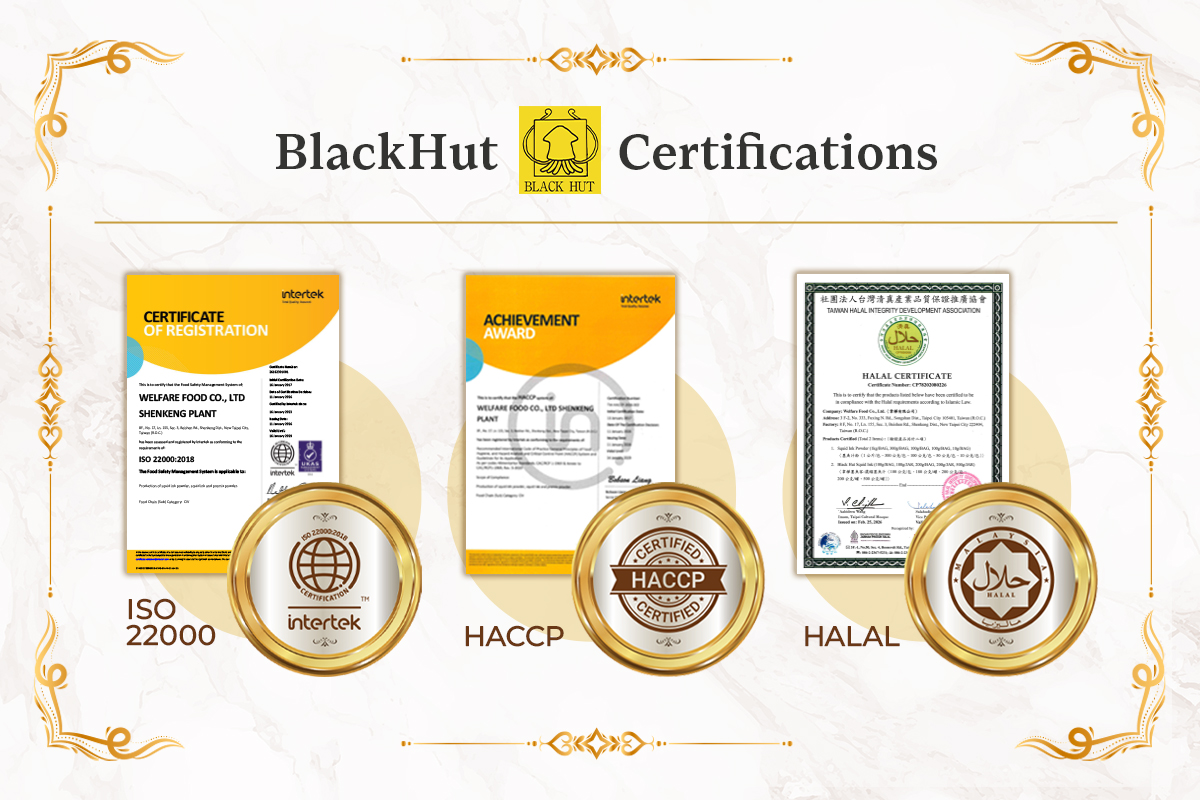
For manufacturers sourcing squid ink for food production, BlackHut holds ISO 22000:2018, HACCP, and HALAL certifications, alongside an FDA Registration Statement, Country of Origin Statement, and Allergens Statement — covering the documentation requirements across major international markets.
Squid Ink as a Natural Coloring Ingredient
Why food producers are turning to natural black colorants comes down to a shift that has been building for years.
Consumers increasingly read ingredient lists.
Retailers have begun requiring cleaner formulations from their suppliers.
Regulatory pressure on certain synthetic dyes has tightened in key markets.
The result is that “naturally colored with squid ink” has become a more attractive proposition than it might have seemed a decade ago — not just as a marketing angle, but as a practical formulation choice.
The comparison with black coloring alternatives is worth mentioning.
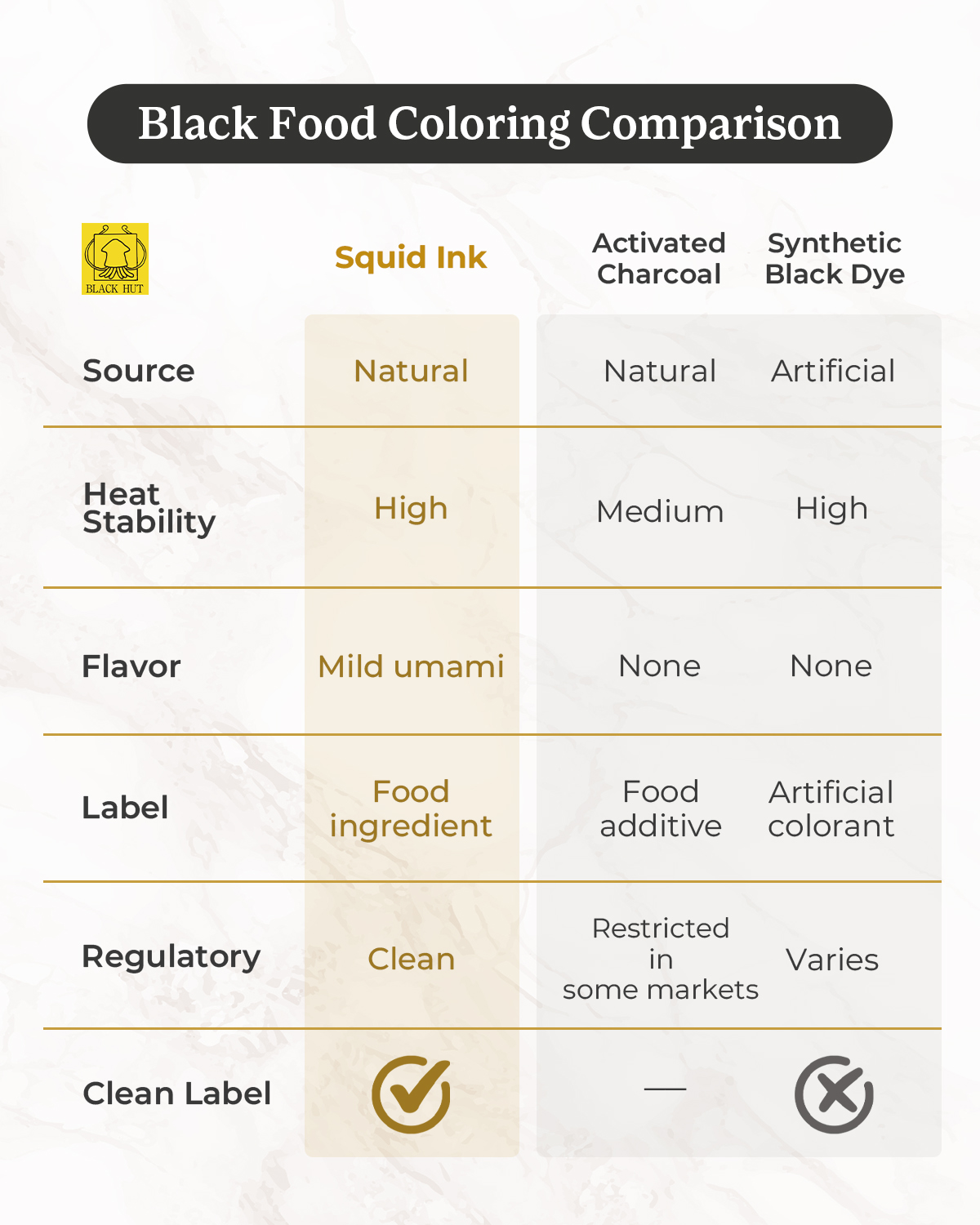
Artificial black colorants can achieve consistent color, but they carry labeling baggage that natural ingredients don’t.
Activated charcoal, another natural option that has had a moment in food trends, offers a dramatic visual effect but comes with its own complications — it can interfere with medication absorption and has faced regulatory scrutiny in certain markets as a food additive.
In the United States, carbon black — including forms such as bamboo charcoal — is not approved as a food color additive by the FDA, meaning it cannot be legally added to foods for coloring purposes.
Squid ink, by contrast, has a centuries-long food history, a clear regulatory classification as a seafood-derived ingredient, and a flavor profile that actually contributes to the dish rather than being inert.
Where squid ink particularly shines is in color stability.
Melanin, the primary pigment in squid ink, is chemically stable across a range of temperatures and pH levels — it holds up through baking, cooking, and processing in ways that some plant-based colorants struggle with.
That stability is a meaningful advantage for food manufacturers who need a colorant that performs consistently across batches and formats.
BlackHut: Squid Ink Expert You Can Rely On
Squid ink is a deceptively specific ingredient.
The difference between a product that performs consistently and one that doesn’t comes down to sourcing, processing, and knowing which format suits your application — and that’s where expertise matters.
BlackHut specializes in natural food coloring solutions, with squid ink at the core of what they do.
With food-grade squid ink and squid ink powder available for food manufacturers, R&D teams, and culinary professionals, BlackHut brings together certified production standards — ISO 22000:2018, HACCP, and HALAL — with nearly a decade of application experience across international markets.
Whether you’re formulating a new product line, looking to replace a synthetic colorant, or simply need a reliable, consistent supply of natural black pigment, the right conversation starts with the right supplier.