
Walk down any grocery aisle today and you’ll notice something has quietly changed.
Labels that once listed “Red 40” or “Yellow 5” are now beetroot, turmeric, or spirulina. Bakeries advertise “no artificial colors.” Even candy brands are reformulating.
Natural food coloring isn’t a trend anymore — it’s becoming the default. And that shift is being driven by three things at once: growing health awareness, tightening regulations, and real consumer demand for cleaner labels.
In this guide, we break down what natural food coloring actually is, why it’s growing, and which sources work best for each color — including one that most home cooks have never considered: squid ink, which delivers a deep, natural black that almost no plant-based ingredient can match.
Table of Contents
ToggleWhat Is Natural Food Coloring?
Natural food coloring is any pigment used to color food that comes from a natural source — plants, minerals, or occasionally animals and microorganisms.
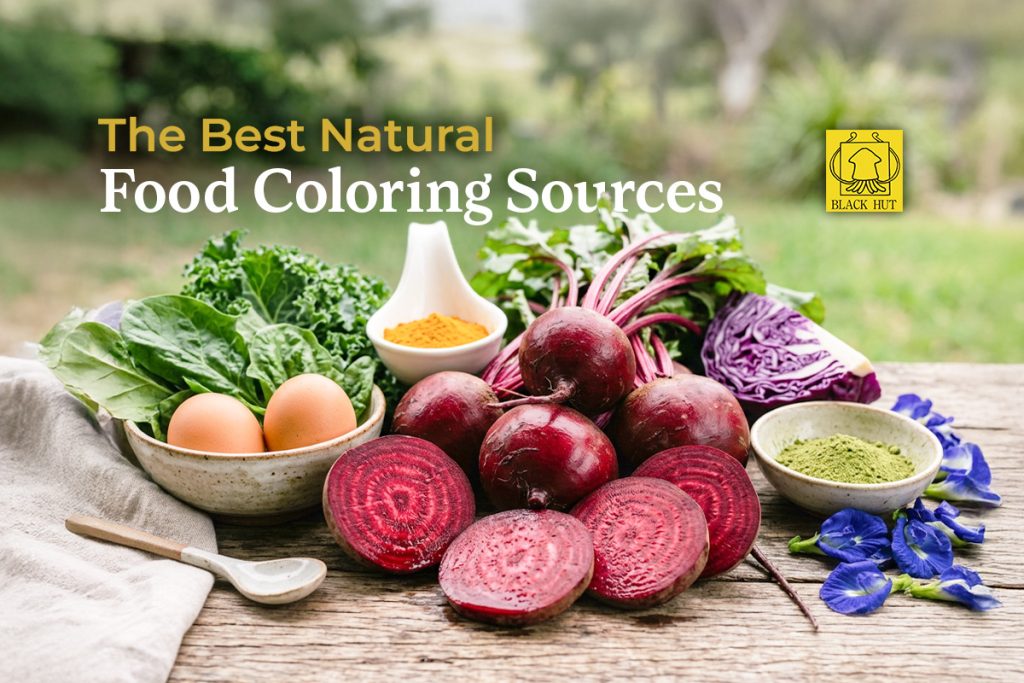
Like beet juice for red, turmeric for yellow, spinach for green, and squid ink for black.
Artificial food dyes, on the other hand, are synthetic compounds created in a lab.
Most of the common ones — Red 40, Yellow 5, Blue 1 — are actually derived from petroleum. They’re engineered to be bright, cheap, and extremely stable, which is exactly why the food industry has relied on them for decades.
Natural colors exist for the opposite reason. Beet juice, turmeric, spirulina, squid ink — these come from food, and they return food to what it used to be before industrialization.
Once consumers understand this, the switch to natural colors stops feeling like a trend and starts feeling like a necessity.
That’s why demand isn’t just coming from niche health brands anymore — it’s coming from mainstream manufacturers who know their customers are paying attention.
Why More People Are Choosing Natural Food Coloring
Three forces are pushing natural colors into the mainstream.
1. Health perception. Consumers are reading labels more carefully than ever. Studies and advocacy groups have raised questions about potential links between synthetic dyes and hyperactivity in children, and even though regulatory agencies continue to evaluate the evidence, many parents simply don’t want to take the risk.
When shoppers see “colored with beet juice” instead of “Red 40,” they feel safer — and that perception drives purchasing decisions.
2. Regulatory and industry shift. The European Union has required warning labels on foods containing certain synthetic dyes for years. In the US, the FDA has been moving in a similar direction, and several states — including California — have passed laws restricting artificial dyes in school foods and certain products. Major brands are reformulating ahead of regulation, not because of it. The direction is clear: synthetic dyes are on borrowed time.
3. Clean label demand. “Clean label” used to be a marketing buzzword. Now it’s a purchasing filter. Shoppers want ingredient lists they can read out loud without stumbling.
Food manufacturers have noticed — and are racing to reformulate products with recognizable, food-based ingredients.
Natural Food Coloring by Color (Best Ingredients for Each)
Different colors come from different sources, and each has its own strengths, weaknesses, and best-use scenarios.
Natural Red Food Coloring: Beetroot and Berries
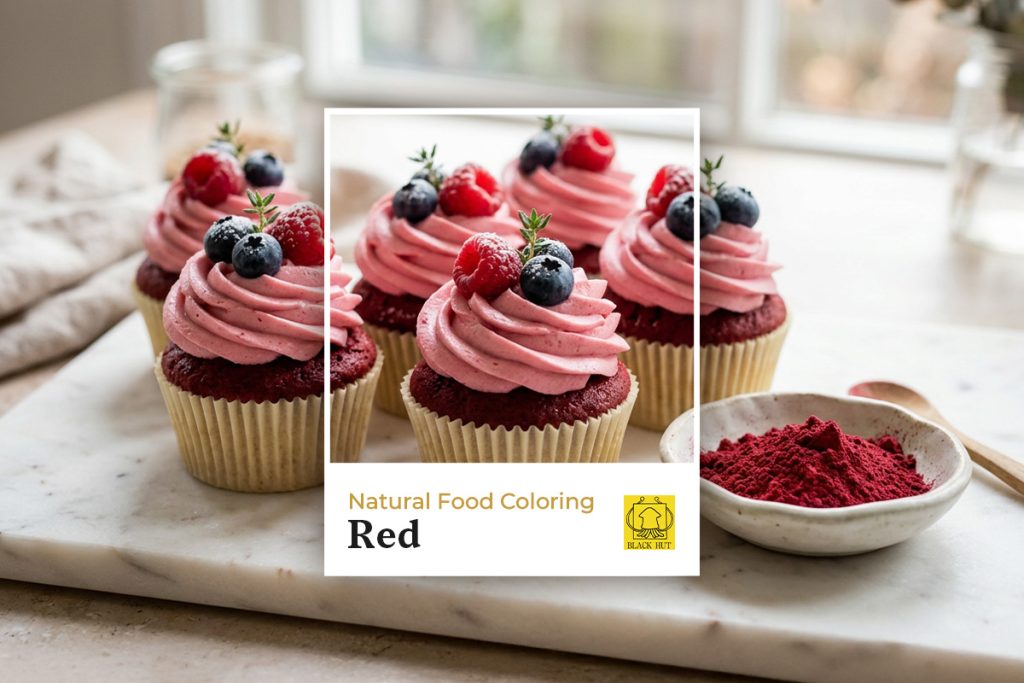
The most common sources for natural red are beetroot powder and berry powders (raspberry, strawberry, cranberry, elderberry).
The upside is obvious: these ingredients feel familiar and can create vibrant, appealing color in frostings, fillings, snack coatings, and drink mixes.
The tradeoff is that they can bring flavor with them. Beet can taste earthy. Berry powders can add tartness. And depending on the pigment, heat and pH can shift the final shade.
Bonus benefits:
- Beetroot contains natural nitrates and antioxidants.
- Berry powders carry anthocyanins, which are marketed as antioxidant compounds.
Allergen & dietary notes:
- Vegan, gluten-free, generally allergen-friendly.
- Berry powders can be a concern for anyone with specific fruit sensitivities.
Best for:
- Frostings, yogurts, smoothies, no-bake desserts, raw bars, fresh pasta, drinks
Avoid in:
- Long-bake goods, highly alkaline batters, products with 12+ month shelf life
Natural Yellow & Orange Food Coloring: Turmeric and Paprika
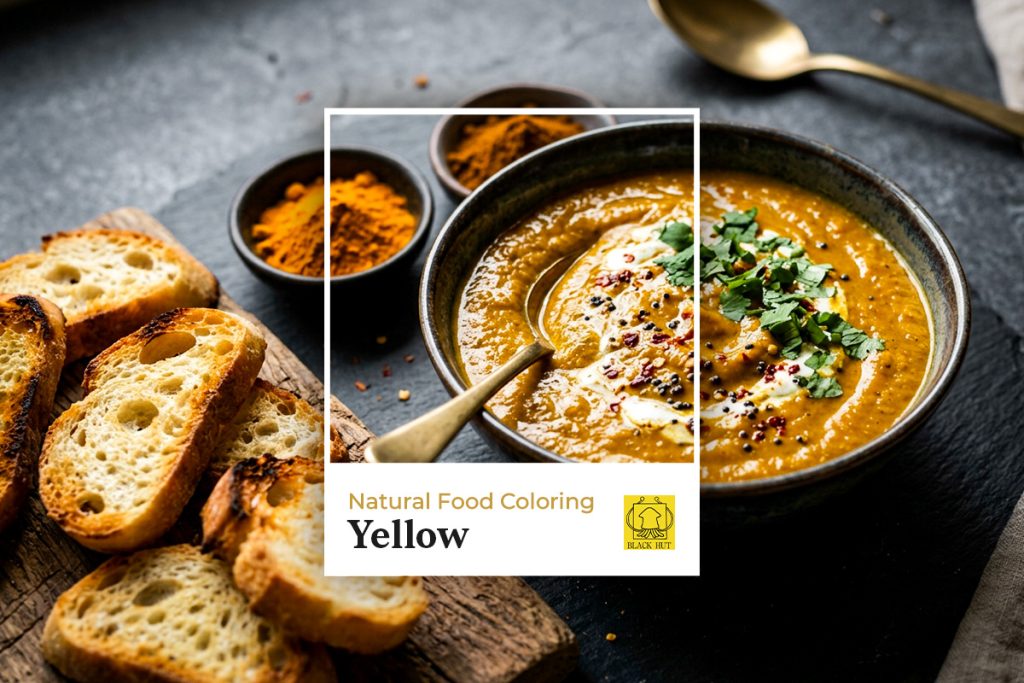
Turmeric and paprika are two of the best-known natural options for yellow and orange shades.
Turmeric gives a bold golden tone and works well when you want warmth and visual richness.
Paprika can move from orange to deeper reddish-orange depending on the extract and concentration. These are strong performers visually, but they can also influence taste.
Bonus benefits:
- Turmeric contains curcumin, one of the most studied plant compounds for anti-inflammatory properties.
- Paprika is rich in carotenoids, which supports eye health.
Allergen & dietary notes:
- Vegan and gluten-free.
- Annatto is a known (though uncommon) allergen for a small population — worth flagging on labels.
- Turmeric can also interact with certain medications, which is rarely a dosage concern at coloring levels but occasionally comes up in consumer questions.
Natural Green Food Coloring: Matcha and Spinach Powder
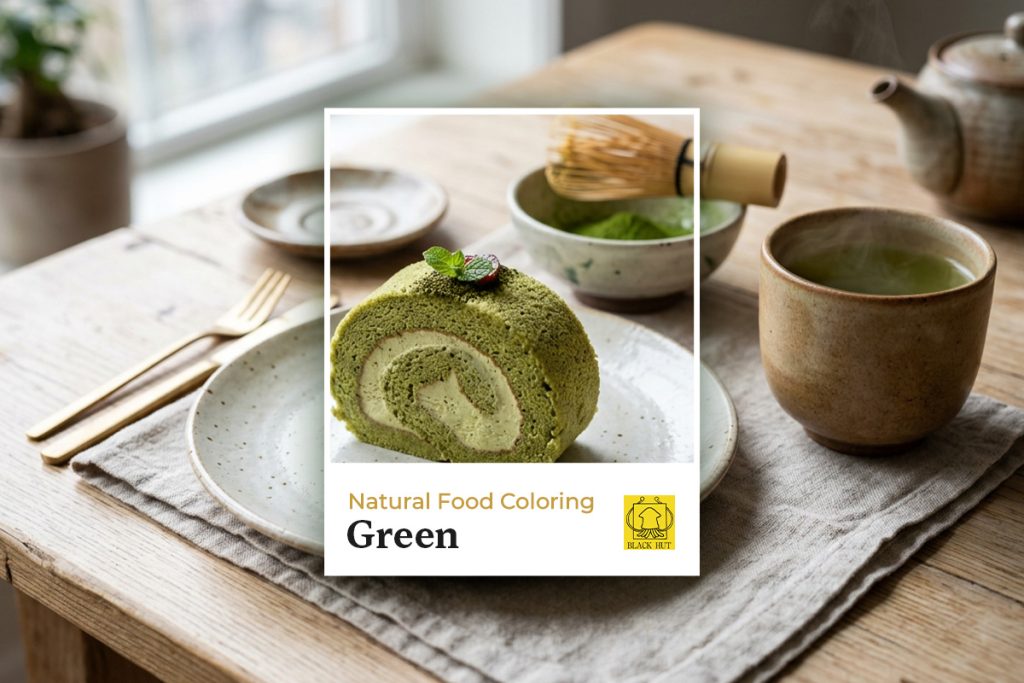
Popular options include matcha, spinach powder, and spirulina.
Matcha gives a premium, recognizable green and works well in products where tea flavor is welcome.
Spinach-based colors can feel familiar and plant-forward, but freshness and stability can vary.
Spirulina is often attractive because it can create a brighter, cleaner-looking green or blue-green effect, though formulation conditions matter.
Bonus benefits:
- Spirulina is roughly 60% protein by weight and is a legitimate superfood ingredient.
- Matcha carries antioxidants and a well-known wellness halo.
Allergen & dietary notes:
- Vegan and gluten-free.
- Matcha contains caffeine — a meaningful detail for products marketed to children.
- Spirulina is algae-based; some consumers with seafood or iodine sensitivities prefer to avoid it.
Best for:
- Smoothies, ice creams, frostings, matcha-based bakery, raw desserts, beverages
Avoid in:
- Long-bake goods, clear-bottle beverages exposed to light, extended shelf-life products
Natural Blue Food Coloring: Butterfly Pea
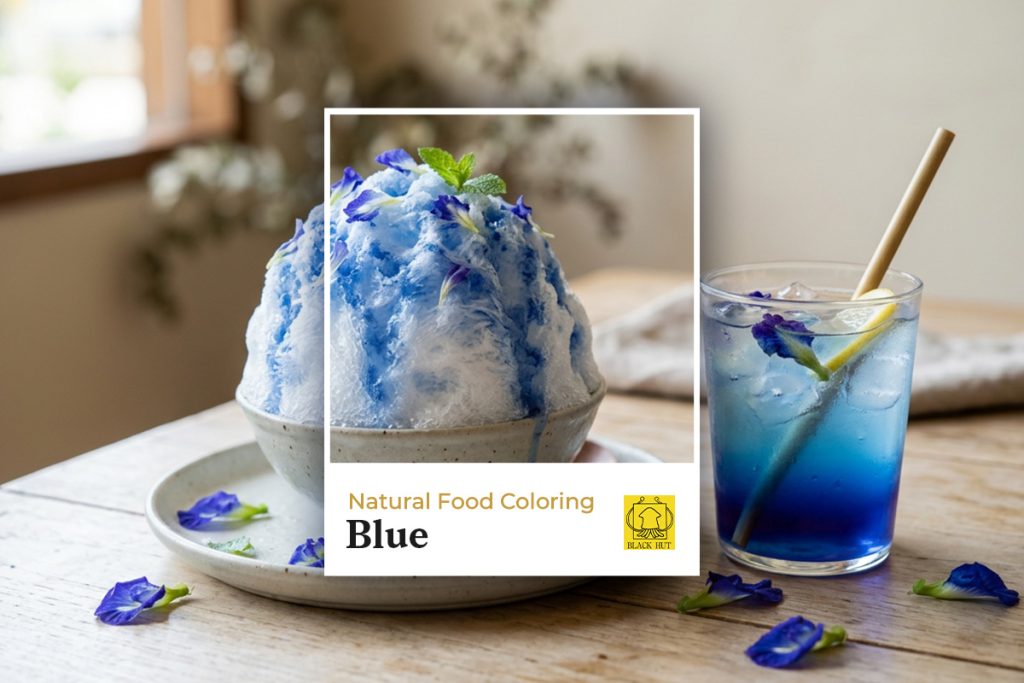
Natural blue is rare, which is why butterfly pea flowers get so much attention.
Butterfly pea is especially interesting because it can create striking blue and blue-purple shades. But it is also known for being pH-sensitive, which means the final color can shift depending on the acidity of the food.
That can be beautiful when used intentionally, but frustrating when it is not expected. Recent FDA approvals around natural-source blues also reflect how valuable this color space has become.
Bonus benefits:
- Butterfly pea has a long history in Southeast Asian traditional use and carries anthocyanin antioxidants.
Best for:
- Cold beverages, jellies, cocktails, novelty desserts, color-changing applications
Avoid in:
- Acidic recipes (unless you want the color shift), baked goods, long shelf life
Natural Black Food Coloring: Squid Ink
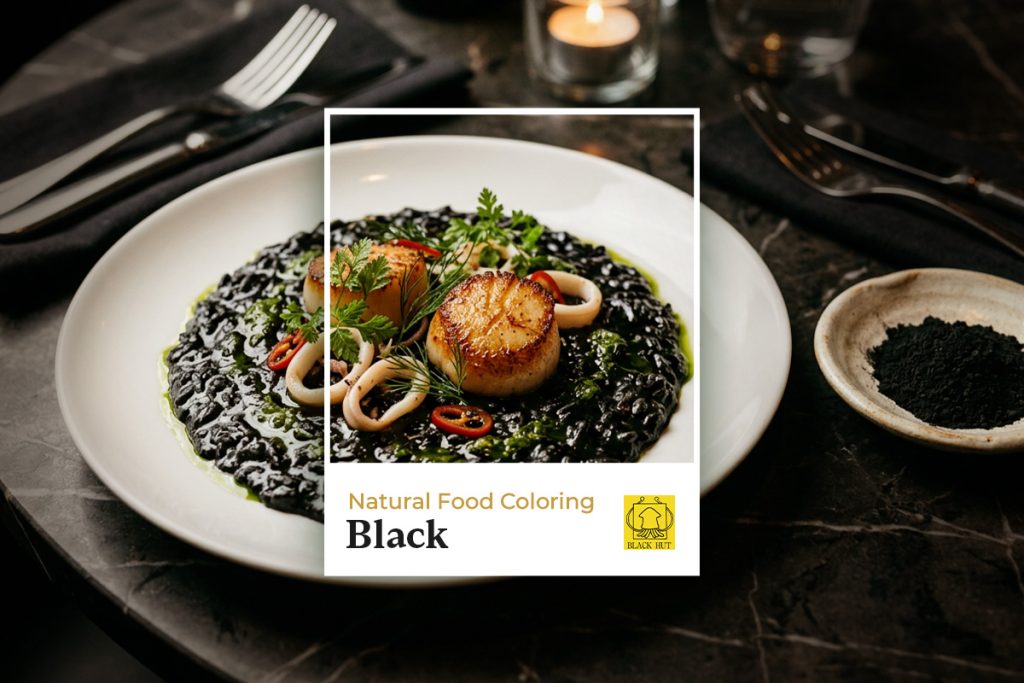
This is where natural color gets genuinely interesting — because there are very few good options for true black, and most of them aren’t ideal.
Squid ink is the standout natural source.
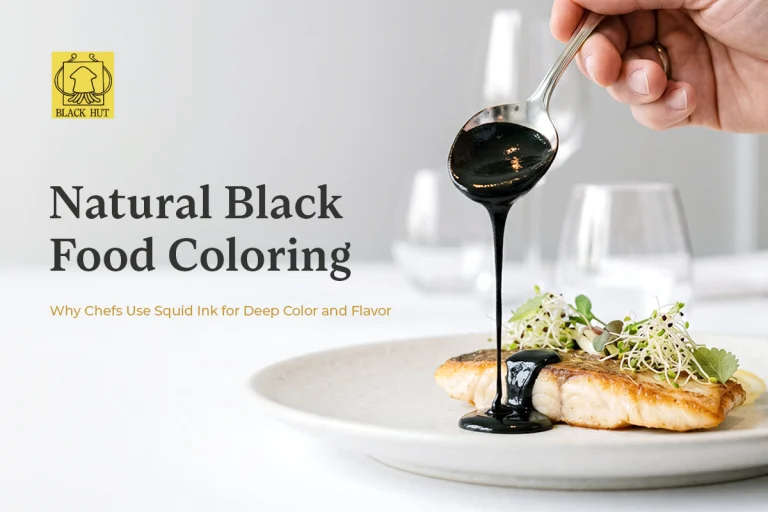
It’s been used in Mediterranean and East Asian cooking for centuries — squid ink pasta, black risotto, black buns, seafood sauces. It delivers a deep, rich black with a subtle umami note that actually enhances savory applications rather than fighting with them.
Squid ink is used in two forms, and the choice matters more than people realize.
- More stable in storage with a longer shelf life
- Standardized concentration means consistent batch-to-batch color
- No added salt — critical for product developers who need full control over sodium content
- Doesn’t disrupt water ratios in a formulation, which matters a lot in precision baking (European breads, bagels, laminated doughs)
- Ideal for: noodles, cookies, cakes, dry mixes, frozen doughs, scaled B2B production
- Dissolves fast, easy to mix by hand or in small batches
- Carries natural salt — which serves two purposes: it acts as a preservative (controlling water activity without synthetic additives) and adds a savory, oceanic flavor base that chefs genuinely want in pasta sauces, risotto, and seafood dishes
- Emulsifies well with olive oil, cream, or stock
- Ideal for: restaurant kitchens, sauce producers, ready-to-eat meal developers, clean-label reformulation projects
Allergen & dietary notes:
Squid ink is a natural ingredient, but there are a few important dietary considerations to keep in mind.
It is not vegan, and in most markets it is classified as a seafood (mollusk) allergen, which means it typically needs to be declared on food labels. While allergen labeling requirements vary by region, food manufacturers like BlackHut choose to include this information clearly for transparency.
On the positive side, squid ink is naturally gluten-free and suitable for pescatarian diets.
For brands working in specific markets, certification may also be relevant.
For example, some suppliers (including Black Hut) offer Halal-certified squid ink products, which can support broader product distribution depending on your target consumers. Kosher status, however, may vary depending on the certifying body and production process.
A Quick Note on Activated Charcoal:
You may have seen it used for black ice cream, lattes, or bread. While it produces a strong black color, its use as a food color raises regulatory and health concerns.
The FDA has not approved activated charcoal as a color additive in food in the US, and health officials have warned that it can interfere with the absorption of medications, including birth control. Several jurisdictions have restricted it.
For a genuine, food-grade, naturally black ingredient, squid ink is a far more practical choice.
Common Challenges with Natural Food Coloring (and How to Work Around Them)
Natural colors can absolutely perform in real-world production — but issues do come up. The good news is most of them are solvable once you understand the root cause.
Problem: Dull or muddy colors:
- Usually caused by pH interaction or using a liquid color in a dry mix where it doesn’t disperse well.
- Solution: switching to a powder form or adjusting batter pH often fixes it.
Problem: Fading during baking:
- Most plant-based pigments are heat-sensitive.
- Solutions: increase dosage slightly, choose more heat-stable sources (turmeric, annatto, squid ink), or apply color after baking (glazes, frostings, dustings).
Problem: Flavor interference:
- Beetroot tastes earthy; matcha tastes like matcha. If the flavor fights your recipe, switch sources or reduce dosage and accept a slightly softer color.
Problem: Batch-to-batch inconsistency:
- This is where ingredient quality matters most. A reliable supplier standardizes pigment concentration so you don’t have to guess. Powders are generally more consistent than liquids because their moisture content is controlled.
A Real-World Note on Squid Ink Color
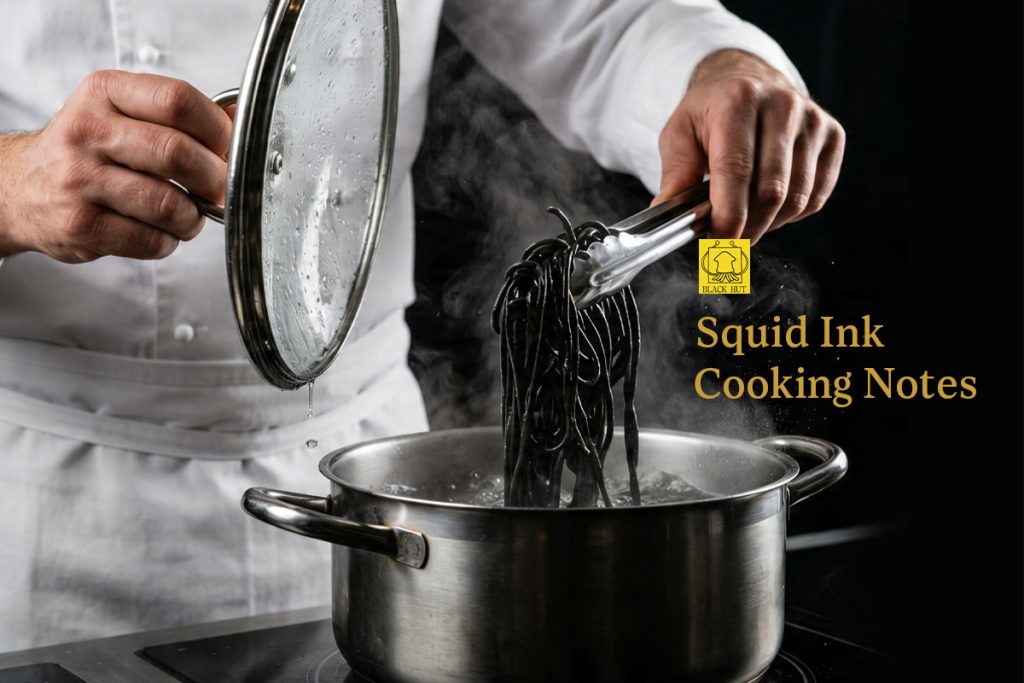
We rarely hear complaints about squid ink not performing — the black retention is genuinely strong. As a general guideline, we recommend 1–2% dosage for dry applications (noodles, baked goods, dry mixes) and 3–5% for liquid applications (sauces, soups, ice cream bases).
One thing worth knowing: because squid ink is a real natural pigment, it behaves like food, not like a synthetic dye.
If you boil squid ink pasta, for instance, some of the color will dissolve into the water — so your pasta water will turn slightly dark. First-time users sometimes ask if this means the color is “bleeding out.” It’s not a defect. It’s just what happens when natural pigments meet hot water.
Synthetic dyes, by contrast, are engineered to stay locked in — which is exactly the unnatural behavior you’re trying to move away from.
The other thing to know: squid ink’s base color is actually a very deep reddish-brown, not a jet black. At lower dosages, or in products with higher moisture content, that reddish-brown undertone can show through, giving the final product a warm, rich tone rather than the harsh “dead black” of synthetic dyes.
If you want a deeper, truer black, simply increase the dosage. This is a feature of working with real pigments — not a limitation.
Choosing the Best Natural Food Coloring for Your Needs
When you’re deciding which natural color to use, work through these questions:
- What are you making? Baked goods need heat-stable pigments. Raw or chilled applications have far more options. Sauces and liquids behave differently than dry mixes.
- How intense does the color need to be? Pastel pink frosting? Almost any berry or beet powder will do. Deep, saturated color? You’ll need higher dosages and more potent sources — and probably a powder form.
- How sensitive is the flavor profile? If your product is a delicate vanilla cream, turmeric or beet flavor will interfere. If it’s a savory pasta or a seafood sauce, squid ink’s umami note becomes a feature, not a problem.
- How long does it need to stay stable? Short shelf life? Fresh plant powders work fine. Long shelf life, frozen, or retail distribution? Look for more stable sources and prefer standardized powders.
- Powder or liquid?
- Powder when you need precision, storage stability, sodium control, or strict water ratios.
- Liquid when you need fast mixing, flavor integration, or emulsification with fats and sauces.
The right answer depends on your recipe, your production environment, and your label goals. There’s no universally “best” natural color — only the best one for a specific job.
Looking for a Natural Color That Actually Works in Real Food?
Most natural color problems don’t come from the ingredient — they come from the wrong ingredient being used in the wrong way.
The difference between a dull, faded product and a rich, vibrant one is almost always in the sourcing, the form (powder vs. liquid), and the dosing.
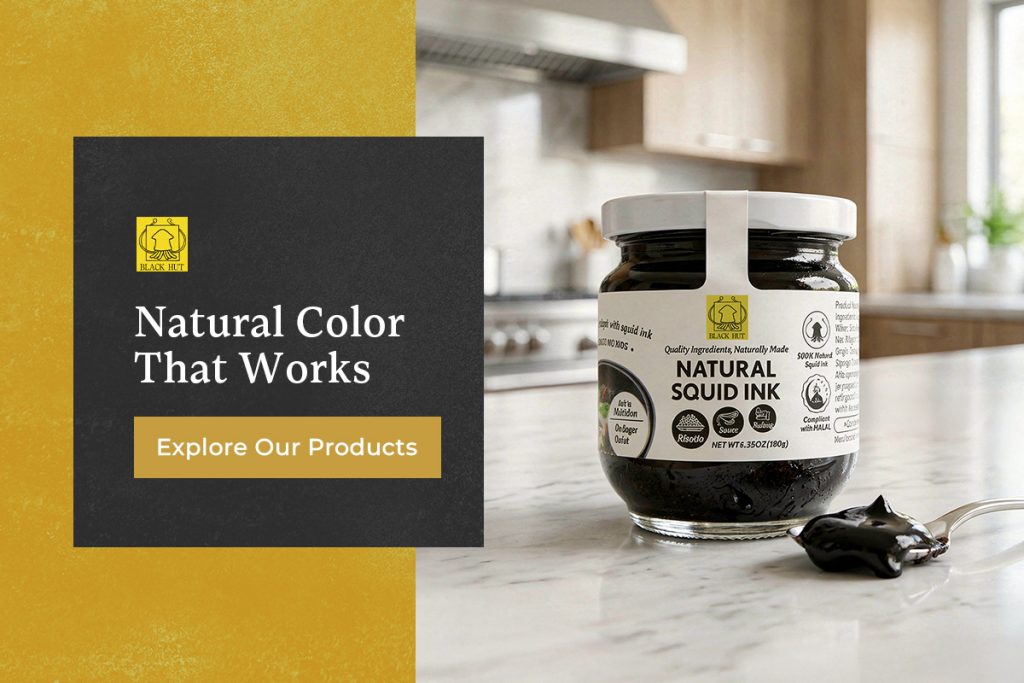
At Black Hut, we focus on natural squid ink and squid ink powder because black is one of the hardest natural colors to get right — and it’s one of the most versatile.
Our ingredients are used by manufacturers, bakeries, restaurants, and product developers who need a clean label without sacrificing performance.
Whether you’re developing black pasta, a striking dessert line, a seafood sauce, or a specialty bakery item, we can help you figure out which form fits your application and what dosage will deliver the color you want.
If you’d like to explore samples or talk through a specific formulation, we’re always happy to help.