
In this guide, we’ll explore why achieving natural black color can be challenging, compare popular black coloring ingredients, explain the differences between squid ink liquid and squid ink powder, and show how both can be used in everyday and seasonal food applications—including Halloween desserts and party foods.
Table of Contents
ToggleWhy Natural Black Food Coloring Is Difficult to Achieve?
Black is one of the hardest colors to create naturally in food.
Many natural ingredients contain brown, purple, or red pigments rather than true black pigments. As a result, recipes often end up looking dark brown or charcoal gray instead of deep black.
This is one reason why high-quality natural black food coloring remains relatively rare compared to synthetic alternatives.
Some of the biggest challenges include:
Many Natural Ingredients Turn Gray or Brown Instead of Black
Depending on the recipe, ingredients that appear black on their own may become dark brown, charcoal gray, or even slightly purple when mixed into food.
Common examples include:
- Buttercream frosting that turns gray instead of black
- Cookie doughs that lose color intensity after baking
Achieving Deep Color Often Requires Large Amounts of Ingredients
Natural colorants typically have lower pigment concentrations than synthetic dyes.
To create a darker appearance, larger amounts may be needed, which can affect the overall recipe.
For example:
- Black cocoa powder can create a rich dark color, but often requires a higher usage level to approach true black.
- Black sesame can darken desserts, but the color may remain closer to charcoal gray than deep black.
Color, Texture, and Flavor Must Be Balanced
One of the biggest challenges with natural black coloring is maintaining the desired taste and texture.
Some ingredients may achieve a darker color but introduce tradeoffs, such as:
- Activated charcoal may affect texture or mouthfeel when used in large quantities.
- Black sesame contributes a noticeable nutty flavor.
- Cocoa-based colorants can alter the chocolate profile of a recipe.
Very few natural ingredients can achieve all these requirements at the same time. This is why artificial black dyes remain common in mass-market foods.
However, growing consumer demand for clean-label products, along with increasing regulatory scrutiny of synthetic food dyes, is driving interest in natural coloring solutions. In the U.S., the FDA has announced plans to phase out several petroleum-based synthetic dyes in 2027, prompting many food brands and manufacturers to seek natural alternatives.
Best Natural Ingredients for Black Food Coloring
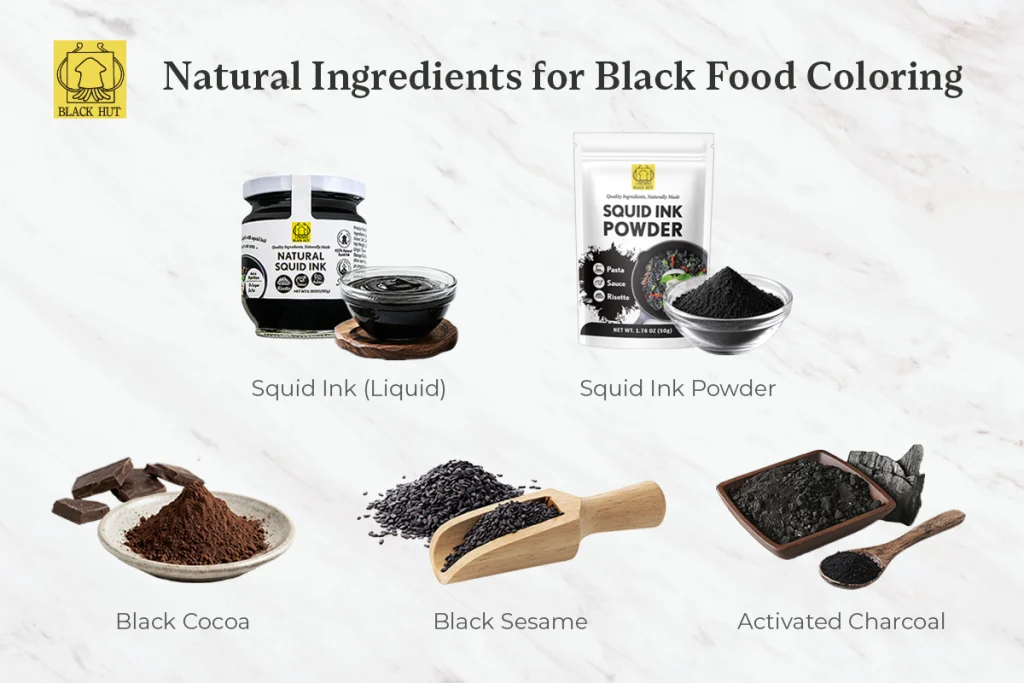
Several ingredients can help create black or near-black foods naturally. As mentioned above, each option has its own strengths and limitations.
Squid Ink
Squid ink liquid is one of the most effective natural black coloring ingredients available.
Pros:
- Deep black color
- Strong visual impact
- Works well in savory applications
- Used in traditional cuisines worldwide
Best for: Pasta, Risotto, Bread, Burger buns, Sauces, Gourmet dishes
Consideration: Adds a subtle savory, ocean-inspired flavor.
Squid Ink Powder
Squid ink powder provides many of the same coloring benefits while offering greater convenience.
Pros:
- Shelf stable
- Easy to store and transport
- Consistent concentration
- Suitable for commercial production
Best for: Bread dough, Dry mixes, Crackers, Seasonings, Food manufacturing applications
When it comes to natural coloring, you might worry about…
1. Water-Solubility Challenges of Squid Ink Powder
Water-solubility dictates the success of squid ink powder. This natural pigment dissolves perfectly in water-based phases, making it ideal for pasta dough and burger buns. BlackHut squid ink powder boasts an extraordinary concentration, requiring only 1% of the total weight to achieve a stunning, vibrant color.
2. How pH Value Impacts Squid Ink Stability
The pH value is crucial for natural food coloring stability. Unlike other plant pigments, squid ink powder is exceptionally stable against pH changes. This resilience comes from its unique chemical structure, where the black melanin is naturally bound to a robust protein matrix.
Black Cocoa Powder
Black cocoa is a favorite among bakers.
Pros:
- Rich dark color
- Familiar chocolate flavor
- Excellent for desserts
Best for: Cakes, Cookies, Frosting, Halloween desserts
Consideration: Often produces very dark brown rather than true black.
Black Sesame
Black sesame provides natural color along with a nutty flavor.
Best for: Asian-inspired desserts, Ice cream, Fillings, Pastries
Consideration: Flavor can become dominant in some recipes.
Activated Charcoal
Activated charcoal is one of the darkest natural coloring ingredients available and can produce a dramatic black appearance even at relatively low usage levels.
Its neutral flavor makes it attractive for certain specialty foods and seasonal products.
Best for: Decorative baked goods, specialty beverages, Halloween-themed foods, Novelty desserts
However, activated charcoal is used primarily for visual impact rather than flavor. It may also affect texture when used in larger quantities and may not be suitable for every food application.
One thing to keep in mind: Bamboo charcoal is currently not approved for use in foods by the U.S. FDA.
| Feature | Squid Ink Liquid | Squid Ink Powder | Black Cocoa Powder | Black Sesame | Activated Charcoal |
|---|---|---|---|---|---|
| True Black Color | ✅ Excellent | ✅ Excellent | ⚠️ Near Black | ❌ Limited | ✅ Excellent |
| Color Intensity (Small Amount Needed) | ✅ High | ✅ High | ⚠️ Medium | ❌ Low | ✅ Very High |
| Flavor Impact | Natural Umami | Natural Umami | Chocolate Flavor | Nutty Flavor | Neutral |
| Commercial Production Friendly | ⚠️ Moderate | ✅ Excellent | ✅ Good | ⚠️ Moderate | ⚠️ Depends on Regulations |
| Shelf Stability | ❌ Lower | ✅ Excellent | ✅ Excellent | ✅ Excellent | ✅ Excellent |
| Texture Impact | ✅ Minimal | ✅ Minimal | ⚠️ May Affect Moisture Balance | ⚠️ May Add Graininess | ⚠️ May Cause Dryness |
| Natural Ingredient Perception | ✅ High | ✅ High | ✅ High | ✅ High | ⚠️ Moderate |
Natural Black Food Coloring: Why Squid Ink Popular in Gourmet and Commercial Foods? (Why Do Chefs Use It?)
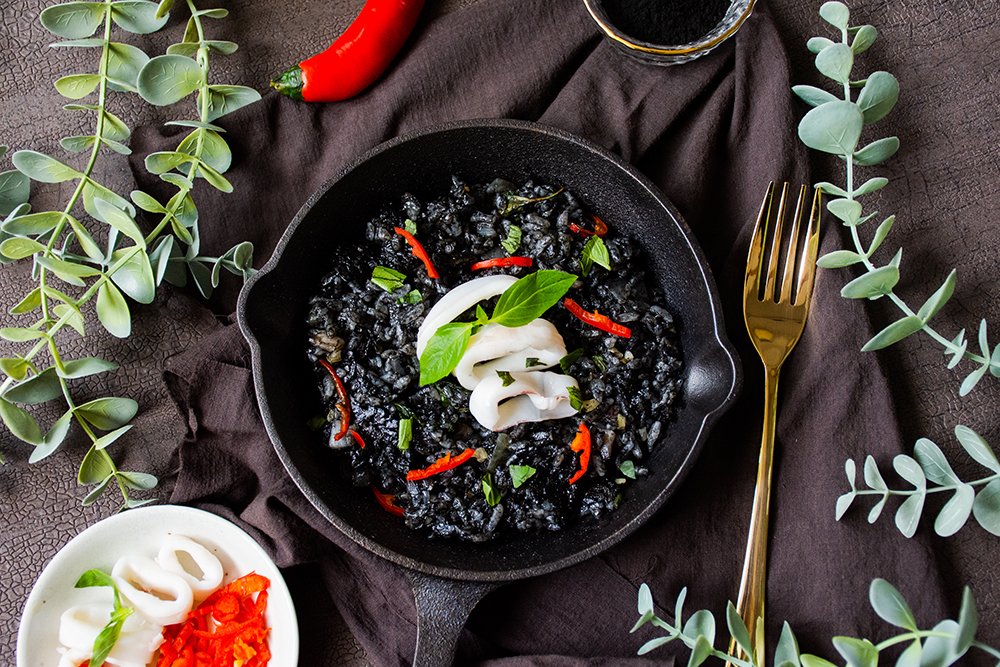
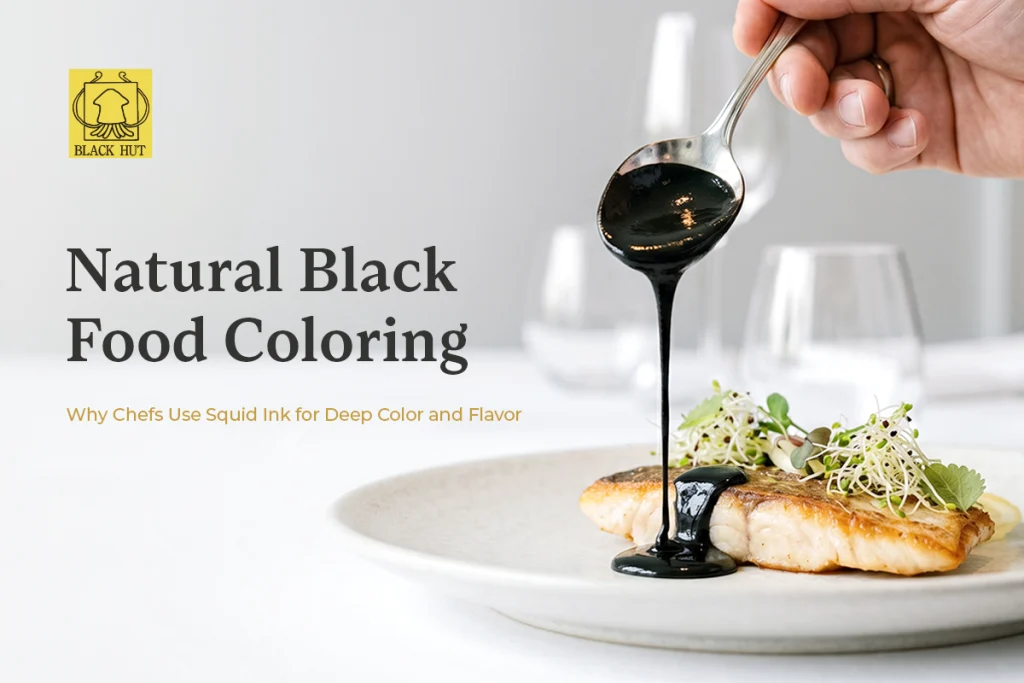
From striking black pasta and black risotto to artisan burger buns and premium baked goods, squid ink has been a favorite ingredient in professional kitchens for decades.
While many natural black colorants struggle to achieve a deep black appearance, squid ink offers a unique combination of visual impact, flavor, and functionality.
This is why it continues to be widely used by chefs, artisan food producers, and food manufacturers around the world.
Creates a Deep Black Color with Small Amounts
One of the biggest advantages of squid ink is its strong pigmentation.
Unlike many natural black coloring alternatives that require large quantities to achieve a dark shade, squid ink can create a rich black appearance with relatively small amounts.
This helps maintain the original texture and formulation of the food while still delivering dramatic visual appeal.
For chefs, this means achieving a premium presentation without heavily altering the recipe.
Adds Natural Umami Flavor
Beyond its color, squid ink is valued for its subtle savory taste.
It naturally contributes umami notes that pair particularly well with seafood dishes, pasta, rice dishes, savory breads and gourmet appetizers.
Unlike some natural colorants that only affect appearance, squid ink can enhance both visual presentation and flavor at the same time.
Delivers Consistent Results for Commercial Production
Consistency is essential in food manufacturing.
Whether producing hundreds of burger buns or large batches of pasta, manufacturers need ingredients that provide predictable color and performance.
Squid ink is often chosen because it offers:
- Consistent color intensity
- Reliable product appearance
- Easy integration into recipes
- Strong visual differentiation from competitors
These advantages make it attractive for both small artisan producers and large-scale food manufacturers.
💡 R&D Tip: Switching from Activated Charcoal to Squid Ink Powder
If you’re replacing activated charcoal with squid ink powder in bread or baked goods, here are a few practical considerations:
- Start with a 1:1 trial. Use the same inclusion rate as your original activated charcoal formulation (typically around 1% of the flour weight) as a starting point. This allows you to compare color, dough handling, and overall performance before making further adjustments.
- Expect better color dispersion. Activated charcoal consists of insoluble particles, while squid ink powder contains water-dispersible proteins and natural colloids. This helps squid ink powder distribute more evenly throughout the dough, often resulting in a smoother and more uniform black color.
- The color tone may differ slightly. Activated charcoal typically produces a cool, matte black, while squid ink powder creates a richer, warmer black with subtle blue or brown undertones. Many artisan bakers prefer this softer, more natural appearance.
- Fine-tune your formula as needed. Because squid ink powder contributes natural umami and interacts differently with water, you may need to make small adjustments to hydration, seasoning, and mixing time to achieve the desired dough handling and finished product quality.
Squid Ink vs. Squid Ink Powder: What's the Difference?
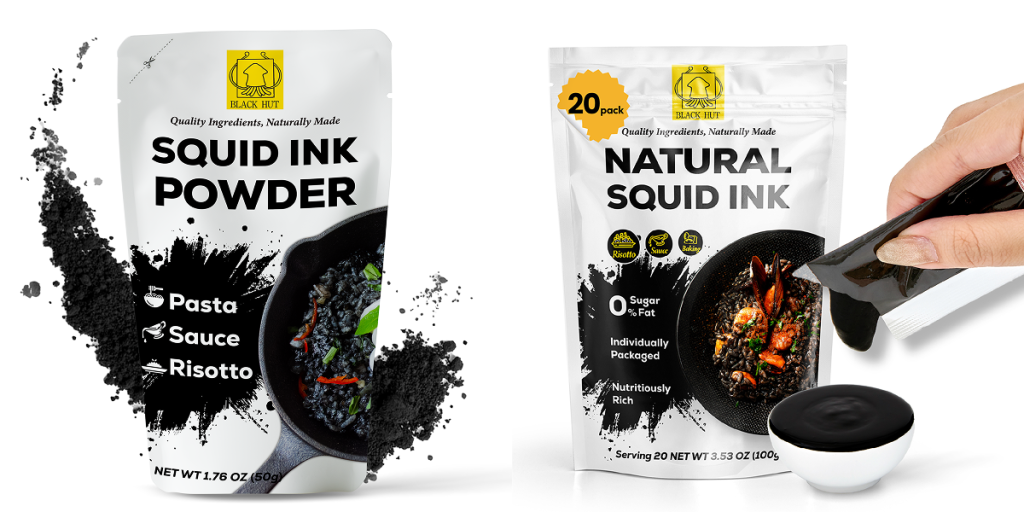
Both liquid squid ink and squid ink powder can be used as natural black coloring ingredients, but each serves different needs.
Liquid Squid Ink
Liquid squid ink is commonly used in traditional culinary applications and wet recipes, such as fresh pasta, risotto, sauces, and seafood dishes
Benefits include:
- Easy blending into liquid ingredients
- Authentic culinary applications
- Smooth texture integration
Squid Ink Powder
Squid ink powder offers greater convenience and flexibility for storage and production, such as bread and bakery products, burger buns, dry mixes, seasonings, and commercial food manufacturing.
Benefits include:
- Concentrated color
- Longer shelf life
- Easier storage and transportation
- More precise dosing and formulation control
Key Differences
- Color: Both provide rich black coloration when used correctly.
- Storage: Powder generally offers longer shelf stability and simpler storage.
- Application: Liquid ink excels in wet recipes, while powder performs particularly well in dry formulations and scalable production.
The best choice depends on your recipe, production process, and desired handling characteristics.
How to Use Squid Ink Liquid and Powder for Natural Black Coloring?
Whether using liquid squid ink or powder, starting with small amounts is usually best.
Best Foods for Squid Ink Coloring
Squid ink works especially well in: Pasta dough, Artisan bread, Burger buns, Crackers, Pizza dough, Savory pastries, Sauces and dressings… (Covering almost everything that can be thought of.)
Quick and Easy Squid Ink Risotto and Pizza Dough Recipe
Common Mistakes to Avoid
- Using too much at once: Adding excessive amounts can alter flavor unnecessarily.
- Poor mixing: Uneven distribution may cause streaking or inconsistent coloration.
- Ignoring recipe type: Not every natural black coloring ingredient performs equally well in every food application.
💡 Professional Baking Tip
When using squid ink powder in bread and baked goods, an inclusion rate of around 1% of the flour weight is typically enough to create a noticeable black color. However, if the goal is to highlight the characteristic seafood and umami flavor of squid ink—not just the color—bakers often use 4–5% squid ink powder (based on flour weight). At this level, the savory marine notes become more pronounced and contribute more significantly to the final flavor profile. For the best flavor experience, pair squid ink bread with seafood-inspired ingredients.Dough Handling Recommendation Squid ink powder can affect dough hydration and mixing characteristics. To maintain good dough handling and fermentation performance, it is recommended to add an additional 1–1.5 times the weight of the squid ink powder in water during mixing. Example: 10 g squid ink powder → Add 10–15 g additional water
Halloween Desserts and Foods That Use Natural Black Coloring

Halloween creates a major seasonal demand for black-colored foods.
Consumers are increasingly interested in dramatic presentations, spooky desserts, and social-media-friendly food experiences. Dark cookie doughs and decorative elements help create eye-catching seasonal treats. Black-colored pastries, tarts, and plated desserts have become popular beyond Halloween as part of broader culinary and visual presentation trends.
Squid ink and squid ink powder can create visually striking burger buns that stand out at Halloween events and themed restaurants.
Natural coloring options allow brands and bakers to participate in these trends while meeting growing interest in recognizable ingredients.
Which Natural Black Coloring Works Best for Different Halloween Foods?
For cakes and frosting → Black cocoa is often the easiest choice.
For artisan bread and burger buns → Squid ink or squid ink powder provides deeper coloration and better visual contrast.
For pasta and savory dishes → Squid ink remains one of the most authentic and effective options.
For commercial food production → Squid ink powder offers advantages in storage, handling, and consistency.
Rather than looking for a single “best” ingredient, consider the flavor profile, application method, and desired appearance of your product.
Looking for Consistent Natural Black Coloring for Food Products?
Natural black food coloring can be challenging, but several ingredients offer effective alternatives to artificial dyes. Among them, squid ink and squid ink powder stand out for their intense color, versatility, and long history in culinary applications.
Whether you’re creating artisan bread, gourmet pasta, seasonal Halloween foods, or developing new food products, understanding the strengths of different black coloring ingredients can help you achieve better results while maintaining the visual impact consumers expect.
If you’re evaluating ingredients for bread, pasta, sauces, specialty foods, or seasonal product launches, exploring the BlackHut squid ink help you achieve both visual appeal and product consistency.