
BlackHut

What Does Squid Ink Taste Like? A Chef’s Guide to Flavor, Uses, and Natural Black Coloring

What-does-squid-ink-taste-like

In this guide, we’ll look at squid ink’s actual taste profile, why it develops its savory character, how it behaves in different foods, and why chefs choose it over other natural black coloring options.

What-does-squid-ink-taste-like

If you have never tried squid ink before, its jet-black appearance might make you expect an intense seafood flavor—or even bitterness or metallic notes.

In reality, squid ink is much milder.

Squid ink has a mildly briny, savory, umami-rich flavor with gentle saltiness and subtle marine notes. Despite its dramatic black appearance, it should NOT taste overwhelmingly fishy when used properly.

If you are trying squid ink for the first time, here is what you can expect:

  • Mildly briny: It has a gentle taste of the sea, similar to the subtle salinity associated with shellfish and seafood broth.
  • Savory: Squid ink adds depth and richness rather than sweetness.
  • Naturally umami: Its savory character can make pasta, risotto, sauces, and other dishes taste fuller and more complex.
  • Slightly salty: Some squid ink products contribute saltiness, although the intensity varies by product and formulation.
  • Not strongly fishy: Its marine character is usually much more subtle than its appearance suggests.

Just as importantly, properly prepared squid ink should NOT be defined by:

  • An overpowering seafood taste
  • Strong bitterness
  • A metallic flavor

The exact experience depends on the amount used and what it is paired with. A small amount may contribute mostly color with just a hint of savory flavor, while a larger amount makes the characteristic marine and umami notes more noticeable.

💡 Concentration of Squid Ink

Not all liquid squid ink products are formulated the same way. Black Hut’s liquid squid ink contains 50% squid ink, compared with around 40% in some other commercially available squid ink products. The concentration of squid ink means formulators should consider both color intensity and usage level when testing it in a recipe.

A Quick Guide to Squid Ink’s Flavor

FlavorWhat to Expect
UmamiDeep, savory richness
BrinyGentle ocean-like character
SaltinessMild to noticeable, depending on the product and amount used
FishinessUsually subtle rather than overpowering
Overall IntensityMild at lower usage levels; more pronounced as concentration increases

Why Does Squid Ink Taste the Way It Does?

Squid ink isn’t simply black pigment. It is a complex natural material containing melanin—the pigment responsible for much of its dark appearance—along with proteins, amino acids, minerals, and other naturally occurring compounds:

Natural Glutamates

One important component is natural glutamates, which are amino acids found naturally in many foods such as tomatoes, mushrooms, and seaweed. These compounds play a key role in creating the savory depth often associated with squid ink.

Umami Compounds

Umami is recognized as one of the five basic tastes alongside sweet, sour, salty, and bitter. Glutamate is one of the primary substances responsible for this taste, and it can be further enhanced by other compounds such as nucleotides, creating a richer and more rounded savory sensation. 

Research on cephalopod ink has found measurable levels of dissolved free amino acids. Taurine often accounts for more than half of these amino acids, while glutamate—one of the compounds associated with umami taste—typically accounts for around 3–7%. This helps explain why squid ink can add savory depth rather than simply making food taste salty or “fishy.”

Marine Minerals

Squid ink also contains marine minerals, which come from its ocean origin. These naturally occurring minerals contribute subtle complexity to its overall flavor profile and help support the distinctive “briny” character often perceived in seafood-based ingredients.

This is also why describing squid ink simply as “salty” or “fishy” misses much of its flavor.

Why Does the Flavor Stay Relatively Subtle?

Umami is different from a strong aroma.

Research suggests that glutamate alone is not necessarily perceived as intensely pleasant or flavorful; the overall eating experience becomes more complex when savory taste interacts with complementary aromas and ingredients.

In practical cooking, squid ink is also normally only one part of a complete dish.

It may be combined with:

  • Pasta or rice
  • Olive oil
  • Butter
  • Garlic
  • Tomato
  • Lemon
  • Cheese
  • Seafood

These ingredients dilute, balance, complement, or highlight different parts of its natural flavor.

Why Such a Dark Ingredient Can Still Taste Subtle?

The striking black color shouldn’t be confused with flavor intensity. 

Squid ink gets much of its dark appearance from eumelanin, while its taste comes from a more complex mixture of dissolved compounds. In other words, a very dark color doesn’t necessarily mean an equally strong flavor.

Why Can Cooking Make Squid Ink Taste More Balanced?

Cooking doesn’t simply make squid ink “disappear.” Instead, the ink becomes integrated with the other components of the dish.

Fat from butter or olive oil can create a rounder overall flavor, acidity from lemon or tomato can brighten seafood notes, and savory ingredients can reinforce the umami character.

This is why a spoonful of squid ink on its own doesn’t necessarily tell you what a finished squid ink pasta or risotto will taste like.

Squid ink flavor is highly dependent on the complete recipe.

How Squid Ink Tastes in Different Foods

One of the most interesting things about squid ink is how differently it behaves depending on the food.

Squid Ink Pasta and Risotto: Subtle, Elegant, and Briny

Pasta is probably the best-known use of squid ink.

Squid ink adds a mild briny and savory note to pasta without overpowering the sauce. In risotto, the creamy rice and stock make its umami character feel richer and more rounded, especially when paired with seafood.

>> Cook the squid ink pasta simple : Squid Ink Capellini

💡Chef’s Tip: Balance Saltiness Before Color

We asked a chef from a restaurant group that has used Black Hut liquid squid ink for years in pasta, risotto, and sauces how they determine the right amount to use. Their priority is saltiness first, color second, while considering the overall flavor of the sauce.

  1. Don’t add more squid ink just to make the dish darker. Increasing liquid squid ink for color alone can throw the seasoning out of balance.
  2. Consider all sources of salt before adding more. When developing your own recipe, consider stock, cheese, sauces, and other salty ingredients first, then taste before adding extra salt.
  3. If deeper black color is the main goal, consider squid ink powder. Squid ink powder can increase color without adding the same saltiness as liquid squid ink, it may offer greater formulation flexibility. Click here to learn more about natural black food coloring.

Squid Ink Bread: Subtle Color or Noticeable Umami

In bread, squid ink and squid ink powder can be used mainly for color or for both color and flavor. Based on our baking experience, around 1% based on flour weight can already provide noticeable dark coloration, while 4–5% creates a more pronounced umami and marine character. It pairs especially well with savory or seafood-based fillings.

Squid Ink Sauces: Richer and Deeper Umami

In sauces, squid ink creates a deeper savory flavor that works particularly well with garlic, butter, tomato, lemon, and olive oil. With shrimp, squid, clams, or scallops, its marine character tends to complement rather than compete with the seafood.

Seafood Dishes: Where Squid Ink Feels Most Natural

Squid ink is particularly at home with seafood. It can reinforce the existing marine and umami characteristics of shrimp, squid, clams, mussels, scallops, and other seafood.

This is one reason squid ink works so naturally in Mediterranean-style seafood dishes: its color may be dramatic, but its flavor belongs to the same culinary family as the rest of the plate.

Why Do Chefs Use Squid Ink Over Other Natural Black Colorings?

Squid ink is not the only ingredient capable of making food dark.

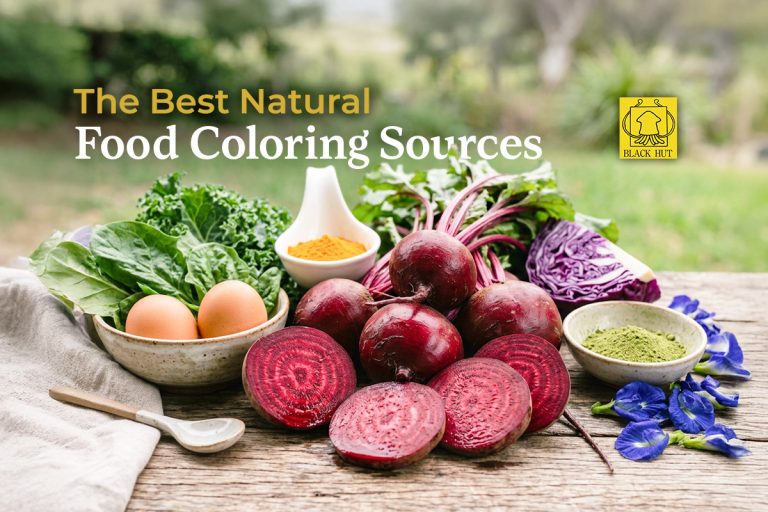
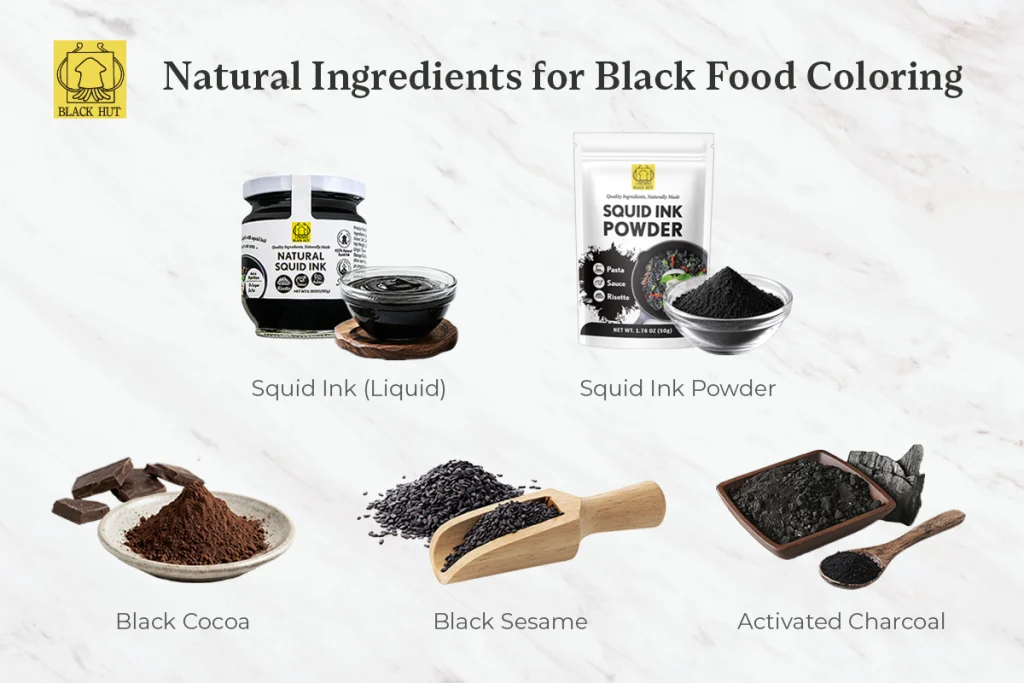
Black cocoa, black sesame, and charcoal-based ingredients can all create dark or near-black foods. But chefs do not choose a coloring ingredient based on color alone.

They also need to consider:

  • Flavor
  • Usage level
  • Recipe compatibility
  • Texture
  • Consistency
  • Application
  • Final presentation
This is where squid ink and squid ink powder stand out.

1. It Adds Color and Flavor at the Same Time

Different natural black ingredients bring very different flavor profiles:
  • Black cocoa: dark color + chocolate flavor
  • Black sesame: dark color + nutty, roasted flavor
  • Activated charcoal: primarily color with little culinary flavor
  • Squid ink: deep black color + subtle marine umami

That makes squid ink especially useful when the coloring ingredient should contribute positively to the recipe rather than simply make it black.

In savory dishes, this is a significant advantage.

Instead of trying to hide the flavor of the coloring ingredient, chefs can make it part of the dish.

2. Deep Black Without Overloading the Recipe

One of the challenges with natural black food coloring is achieving enough saturation.

Some natural ingredients need to be added in relatively large amounts before a recipe becomes truly dark. That can introduce unwanted flavor or affect texture.

Squid ink is naturally highly pigmented, so relatively modest amounts can already create significant visual impact depending on the food and formulation.

This is especially valuable in bread and dough systems, where adding too much dry material can change hydration and handling.

The goal isn’t simply to create the darkest possible food.

It’s to achieve the desired color without unnecessarily compromising the recipe.

3. It Is Naturally Suited to Savory Foods

Black cocoa can be an excellent choice for cake.

Black sesame can be ideal for ice cream or Asian desserts.

But neither naturally belongs in every savory dish.

Squid ink does.

Its marine and umami character works naturally with:

  • Pasta
  • Rice
  • Seafood
  • Savory bread
  • Burger buns
  • Crackers
  • Sauces
  • Appetizers

That makes it particularly valuable for chefs who want natural black color in a savory application without introducing chocolate or nutty flavors.

4. It Can Offer Practical Advantages in Commercial Production

The same characteristics that make squid ink useful in a restaurant can also matter in food manufacturing.

Commercial producers need more than a beautiful first batch. They need the next batch to look and perform similarly.

Important considerations include:

  • Consistency: Predictable ingredient performance helps maintain a recognizable finished product.
  • Dispersion: Good distribution helps create more uniform color throughout doughs and formulations.
  • Repeatability: Standardized processes make it easier to reproduce the intended appearance at scale.
  • Shelf stability: Squid ink powder can be particularly useful when storage, transportation, and dry-formulation handling are important considerations.
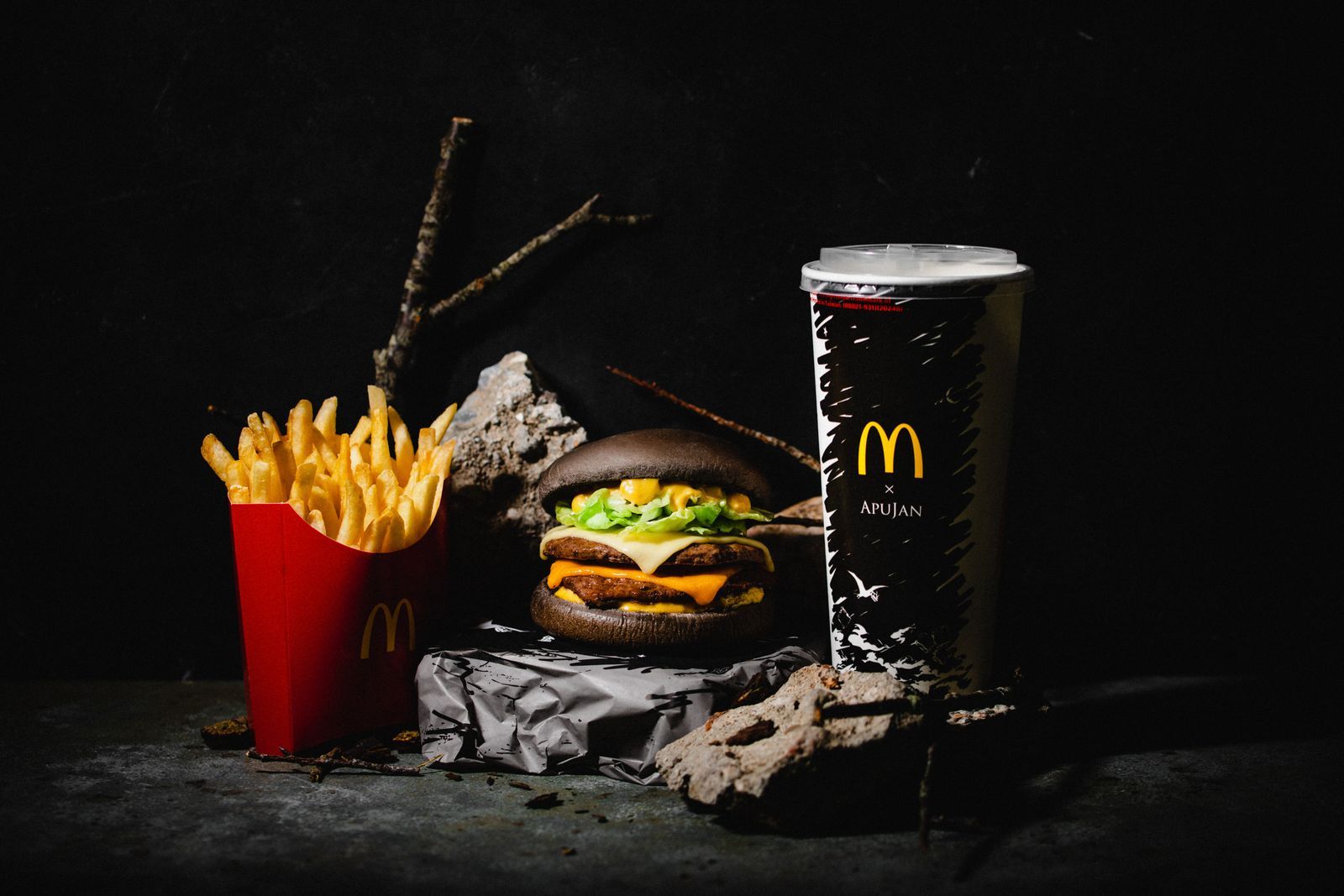
The commercial potential of black food is not purely theoretical. Major food brands have experimented with striking black products, showing how squid ink can become part of a large-scale commercial food concept.

McDonald’s x Apujan — Black Burger Bun

McDonald’s Taiwan collaboration with fashion label Apujan featured a jet-black burger bun colored with squid ink supplied by Black Hut — proof that squid ink has moved fully into mainstream food culture, not just fine dining.
5. Squid Ink Has Become Part of the Gourmet Experience

There is also an emotional side to ingredient selection.

A black plate of pasta or risotto immediately looks unusual and memorable. But unlike coloring a familiar food black purely for novelty, squid ink already has an established culinary identity.

It is associated with:

  • Gourmet cuisine
  • Seafood traditions
  • Artisan cooking
  • Chef creativity
  • Dramatic restaurant presentation

That allows chefs and specialty food brands to create something that feels both visually modern and rooted in culinary tradition.

Squid ink isn’t simply “black food coloring.” It can become part of the story of the dish.
Feature Squid Ink Liquid Squid Ink Powder Black Cocoa Powder Black Sesame Activated Charcoal
True Black Color ✅ Excellent ✅ Excellent ⚠️ Near Black ❌ Limited ✅ Excellent
Color Intensity (Small Amount Needed) ✅ High ✅ High ⚠️ Medium ❌ Low ✅ Very High
Flavor Impact Natural Umami Natural Umami Chocolate Flavor Nutty Flavor Neutral
Commercial Production Friendly ⚠️ Moderate ✅ Excellent ✅ Good ⚠️ Moderate ⚠️ Depends on Regulations
Shelf Stability ❌ Lower ✅ Excellent ✅ Excellent ✅ Excellent ✅ Excellent
Texture Impact ✅ Minimal ✅ Minimal ⚠️ May Affect Moisture Balance ⚠️ May Add Graininess ⚠️ May Cause Dryness
Natural Ingredient Perception ✅ High ✅ High ✅ High ✅ High ⚠️ Moderate

💡 Food Additives in Squid Ink

Again, not all squid ink products are formulated the same way. Black Hut also uses carrageenan, a hydrocolloid derived from red seaweed, in its formulation. This differs from products formulated with other types of thickeners and reflects Black Hut’s focus on a seaweed-derived ingredient system.

💡 Natural Black Food Coloring Effect of Squid Ink

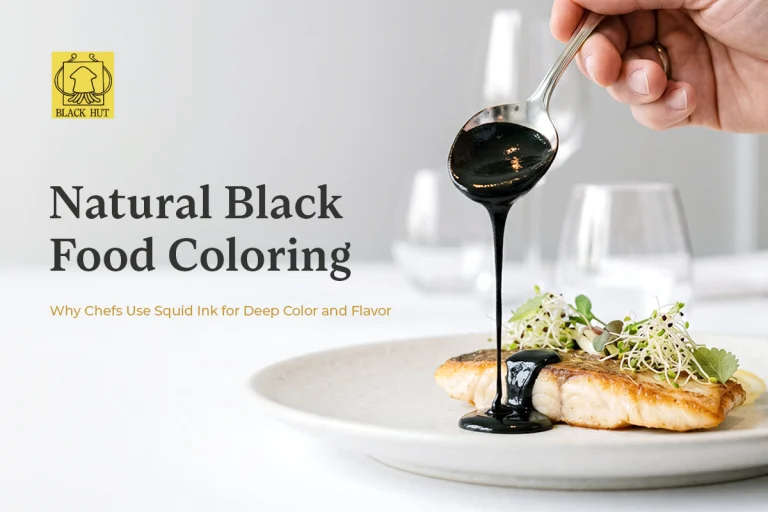
If you want to explore the coloring side in more detail, our guide to Natural Black Food Coloring: Why Chefs Use Squid Ink for Deep Color and Flavor compares squid ink with other naturally derived black ingredients.

Best Squid Ink Pasta Recipe — With or Without Seafood

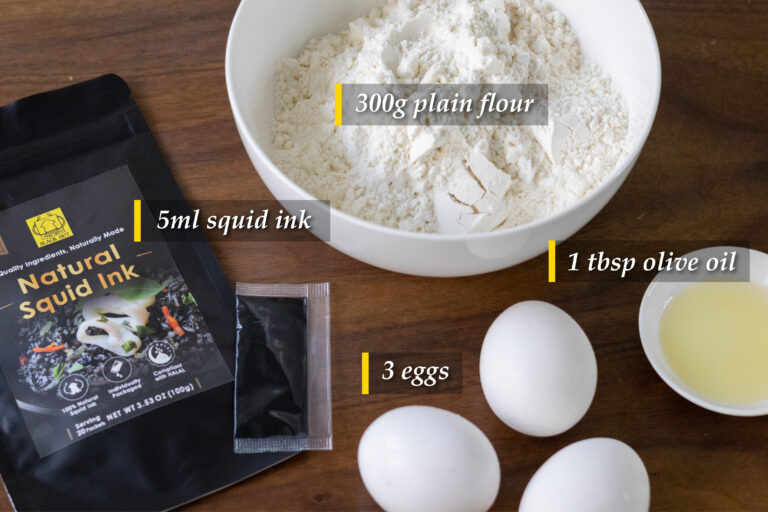
Squid ink pasta dough recipe

If all this talk about flavor has made you curious about actually tasting squid ink, pasta is one of the easiest places to start.

The recipe can be kept simple so the squid ink remains noticeable without becoming overwhelming.

Easy Squid Ink Pasta with Seafood

Ingredients

  • 300g Plain Flour
  • 5 ml Liquid squid ink
  • 3 eggs
  • 1 tbsp 
  • Olive oil
  • Shrimp, squid, or your favorite seafood
  • Garlic
  • Dry white wine
  • Lemon
  • Salt and black pepper
  • Fresh parsley

💡 Quick Tip: Prefer ready-made pasta? Simply skip the flour, eggs, and squid ink, and use squid ink capellini instead.

Want Squid Ink Pasta Without Seafood?

Simply leave out the shrimp or squid.

Build the sauce with:

  • Garlic
  • Olive oil or butter
  • White wine
  • Squid ink
  • Pasta water
  • Lemon
  • Parmesan, if desired

The result lets you experience squid ink’s savory character without adding additional seafood flavors.

>> Check out here for more about homemade pasta with wine pairing.

Frequently Asked Questions About Squid Ink Taste

What's the Difference Between Squid Ink and Squid Ink Powder?

Both formats offer the characteristic color and savory profile of squid ink, but they fit different processes.

Liquid Squid Ink vs Squid Ink Powder

FeatureLiquid Squid InkSquid Ink Powder
Best Suited ForWet recipesDry or controlled formulations
Common UsesPasta, risotto, saucesBread, buns, crackers, dry mixes
HandlingEasy to blend into wet ingredientsEasy to measure and incorporate into dry ingredients
StorageDepends on product formulationGenerally more convenient for longer-term dry storage
Commercial UseRestaurant and wet food applicationsParticularly useful for manufacturing and baking

They share the same basic savory, marine, and umami character, but they may not taste identical.

Concentration, processing, added ingredients, and the amount used can all affect the final flavor. Liquid squid ink works naturally in wet recipes, while powder gives bakers and food producers more control in dry formulations.

The better choice depends more on the application than on which format is “better.”

Yes, particularly as the amount increases.

At lower inclusion levels, squid ink powder may contribute strong color while keeping its flavor relatively subtle. Higher levels can create a more noticeable umami and marine profile.

Because powder also adds dry material to the formula, bakers may need to adjust water and mixing conditions to maintain the desired dough consistency.

Definitely not.

Although black pasta may be its most famous application, squid ink can also be used in:

  • Risotto
  • Bread
  • Burger buns
  • Crackers
  • Sauces
  • Aioli
  • Seafood dishes
  • Savory pastries
  • Specialty food products

Liquid ink is especially convenient for wet recipes, while squid ink powder expands the possibilities for baking and commercial food development.

Looking for a Premium Squid Ink Ingredient?

Understanding squid ink starts with flavor, but choosing the right ingredient also depends on what you want to make.

A restaurant developing black seafood pasta may have very different needs from a bakery creating squid ink buns or a food manufacturer testing a new commercial product.

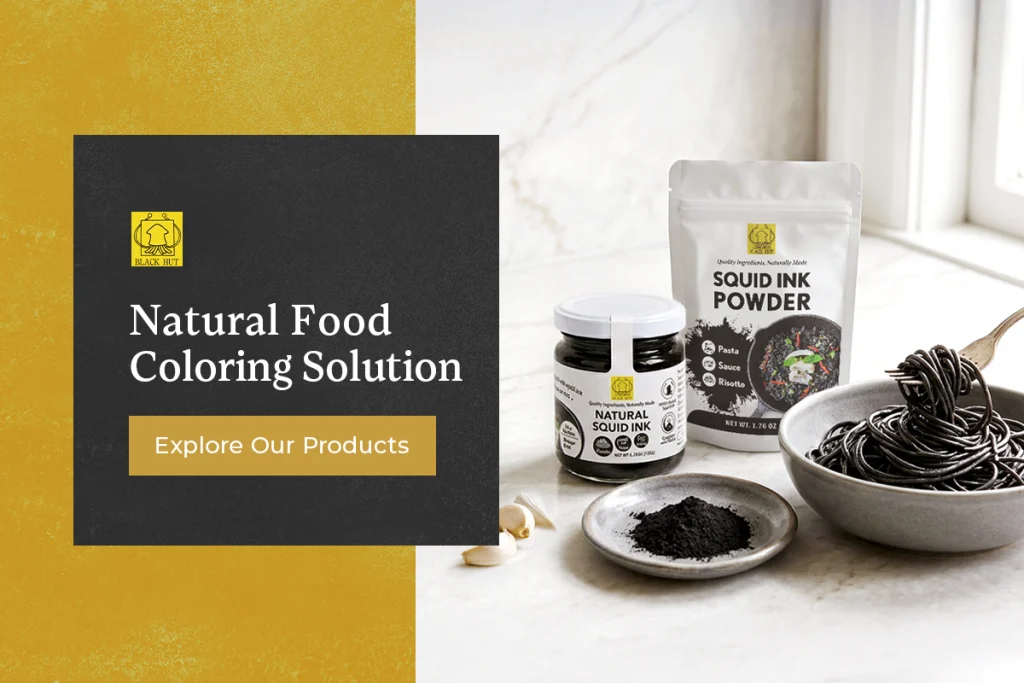
Black Hut offers both Natural Squid Ink Liquid and Squid Ink Powder, giving chefs, bakers, and food developers the flexibility to choose the format that works best for their formulation.

Explore our squid ink products or contact Black Hut to discuss your application and sample needs.